|
Geoff
Bradford |
Bristol Rovers FC
1 appearance, 1 debut goal
P 1 W 1 D 0 L 0 F 5:
A 1
100% successful
1954-55
captain: none
minutes played: 90 |
|
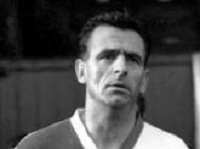 |
|
Timeline |
| |
Geoffrey Reginald William Bradford |
|
Birth |
18 July 1927 in Frenchay, Bristol,
Gloucestershire
[registered in
Bristol, September 1927].
Attended
Soundwell School |
|
Marriage |
to Betty Flay
[registered in Kingswood, March 1951]. |
|
Death |
30 December 1994 in Bristol, aged 67 years 165 days
[registered in Bristol, Gloucestershire December 1994]. |
|
Source |
Douglas Lammings' An
English Football Internationalist Who's Who [1990] &
 |
|
Club Career |
|
Club(s) |
Played
schoolboy football in Bristol and played with local side Soundwell FC
whilst having trials with Blackpool FC and Blackburn Rovers FC. Bristol
Rovers FC signed Bradford in May 1949, and he remained until his retirement
in 1964, despite breaking his leg in November 1953, keeping him out for
six months. He made 461 league appearances, scoring 245 goals. |
|
Club honours |
Football
League Division Three (South) winners 1952-53; |
|
Individual honours |
None |
|
Distinctions |
None |
|
Height/Weight |
6'
1", 12st.
7lbs [1957]. |
|
Source |
Douglas Lammings' An English
Football Internationalist Who's Who [1990]. |
|
England Career |
|
Player number |
One of three who became the 748th players (750) to
appear for England. |
|
Position(s) |
Inside-left |
|
Only match |
No. 298, 2 October 1955,
Denmark
1 England
5, a British Exhibition match at
Idrætsparken, København, aged
28 years
76 days.
 |
|
Major tournaments |
World Cup
Finals 1954 (provisional) |
|
Team honours |
None |
|
Individual honours |
None |
|
Distinctions |
The eleventh
Gloucestershirian to represent England. |
|
Beyond England |
|
After his retirement in 1964,
Bradford became a petrol tanker driver, continuing to live quietly in
Bristol. -
An English Football Internationalists' Who's Who.
Douglas Lamming (1990). Hatton Press, p.42. |
 England
Football Online
England
Football Online