|
|
|
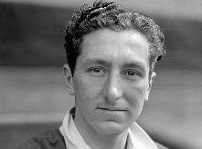
Ray
Bowden |
Arsenal
FC, Newcastle United FC
6 appearances, 1 goal
P 6 W 4 D 0 L 2 F 18:
A 9
67% successful
1934-38
captain: none
minutes played: 540 |
 |
|
Profile |
|
Full name |
Edwin Raymond Bowden |
|
Born |
13 September 1909
in West Looe, Cornwall [registered in
Liskeard, December 1909]. |
|
Census Notes |
According to the 1911 census,
Edwin Raymond is the youngest of four children to Tom and Ethel. They live
in North Road in West Looe. His father is a signal porter.
According to Passenger Lists,
Edwin Bowden was one of eighteen footballers on an FA Tour, courtesy of
Canadian Pacific Railway Company, had left the port of Liverpool on 11 May
1931, bound for Montreal, Canada, on the Duchess of Richmond. They
returned from Quebec, arriving at Southampton on 23 July 1931, on board
the Empress of Britain. He was living at 2 Rockville in East Looe. |
|
According to the 1939 register, the single Edwin is living with his
widowed mother, Ethel, at 26 Green Park Avenue in Plymouth. He is a
dockyard stores assistant. |
|
Married |
to Vera M. Martin
[registered in Devon Central, December 1942]. |
|
Died |
23 September 1998
in Plymouth,
aged
89 years 10 days
[registered in Plymouth, Devon, September 1998]. |
|
Height/Weight |
5'
9½", 10st.
12lbs [1936]. |
|
Source |
Douglas Lammings' An
English Football Internationalist Who's Who [1990] & FindMyPast.com |
|
Club Career |
|
Club(s) |
Started
with his local non-league club, Looe FC. He signed amateur forms with
Plymouth Argyle FC in 1926, turning professional the next season. He had
scored 82 goals in 145 league appearances when Arsenal
signed him for £7000 in March 1933, where he scored another
42 goals in 123 league appearances. Newcastle United FC signed
Bowden on 5 November 1937 for £5000. He retired in September 1939
after 48 league appearances and six goals. |
|
Club honours |
Football
League Division Three South winners 1929-30; Football
League Champions 1933-34, 1934-35; FA Cup winners
1935-36; |
|
Individual honours |
Football
League (two appearances) |
|
Distinctions |
For Newcastle
United FC, Bowden scored against Swansea Town FC on 2 September 1939.
War broke out, and he never played competitive football again. |
|
Source |
Douglas Lammings' An English
Football Internationalist Who's Who [1990]. |
|
England Career |
|
Player number |
One of six who
became the 600th players (604) to appear for England. |
|
Position(s) |
Inside-right |
|
First match |
No. 194,
29 September 1934, Wales 0 England 4, a British Championship match at
Ninian Park, Sloper Road, Cardiff, aged 25 years
16 days. |
|
Last match |
No. 207, 2 December 1936,
England 6 Hungary 2, a friendly match at Arsenal Stadium, Highbury, London, aged
27 years 80 days. |
|
Major tournaments |
British Championship 1934-35, 1935-36; |
|
Team honours |
British Championship shared 1934-35; |
|
Individual honours |
FA Tour of Canada 1931; |
|
Distinctions |
Only the third
Cornwallian to represent England |
|
Beyond England |
|
Later employed as a sports outfitter
in Plymouth, he had once been an auctioneer's clerk. -
An English Football Internationalists' Who's Who.
Douglas Lamming (1990). Hatton Press, p.39. |
|
Ray Bowden - Career Statistics |
| Squads |
Apps |
comp. apps |
Mins. |
Goals |
goals ave.min |
comp. goals |
Capt. |
Disc. |
|
9 |
6 |
3 |
540 |
1 |
540
min |
1 |
none |
none |
|
minutes are an approximation, due to the fact that many matches rarely stick to exactly ninety minutes long, allowing time for injuries and errors. |
|
Ray Bowden
- Match Record - All Matches |
|
Type |
P |
W |
D |
L |
F |
A |
GD |
FTS
|
CS |
FAv |
AAv |
Pts% |
W/L |
|
Home |
3 |
2 |
0 |
1 |
10 |
6 |
+4 |
0 |
0 |
2.667 |
2.00 |
66.7 |
+1 |
|
Away |
3 |
2 |
0 |
1 |
8 |
3 |
+5 |
0 |
1 |
3.333 |
1.00 |
66.7 |
+1 |
| All |
6 |
4 |
0 |
2 |
18 |
9 |
+9 |
0 |
1 |
3.00 |
1.50 |
66.7 |
+2 |
|
Ray Bowden
- Match Record - By Type of Match |
|
Type |
P |
W |
D |
L |
F |
A |
GD |
FTS |
CS |
FAv |
AAv |
Pts% |
W/L |
|
British Championship |
3 |
2 |
0 |
1 |
8 |
3 |
+5 |
0 |
1 |
2.667 |
1.00 |
66.7 |
+1 |
| Friendly |
3 |
2 |
0 |
1 |
10 |
6 |
+4 |
0 |
0 |
3.333 |
2.00 |
66.7 |
+1 |
| All |
6 |
4 |
0 |
2 |
18 |
9 |
+9 |
0 |
1 |
3.00 |
1.50 |
66.7 |
+2 |
|
Ray Bowden
- Match Record - Tournament Matches |
|
British Championship Competition |
|
Type |
P |
W |
D |
L |
F |
A |
GD |
FTS |
CS |
FAv |
AAv |
Pts% |
W/L |
| BC 1934-35 |
1 |
1 |
0 |
0 |
4 |
0 |
+4 |
0 |
1 |
4.00 |
0.00 |
100.0 |
+1 |
| BC 1935-36 |
2 |
1 |
0 |
1 |
4 |
3 |
+1 |
0 |
0 |
2.00 |
1.50 |
50.0 |
=0 |
|
BC
All |
3 |
2 |
0 |
1 |
8 |
3 |
+5 |
0 |
1 |
2.667 |
1.00 |
66.7 |
+1 |
|
All Competition |
|
Type |
P |
W |
D |
L |
F |
A |
GD |
FTS |
CS |
FAv |
AAv |
Pts% |
W/L |
| BC |
3 |
2 |
0 |
1 |
8 |
3 |
+5 |
0 |
1 |
2.667 |
1.00 |
66.7 |
+1 |
|
All |
3 |
2 |
0 |
1 |
8 |
3 |
+5 |
0 |
1 |
2.667 |
1.00 |
66.7 |
+1 |
Ray Bowden
- Match History
|
Club:
Arsenal F.C. - six full appearances
(540 min), one goal |
F.A. International Selection Committee - six full appearances
(540 min)x
|
Notes
RAY BOWDEN
was paid perhaps the ultimate footballing compliment in March 1933 when
the most successful manager the English game had then known asked him to
replace a star performer in one of the greatest of all club sides.
The Arsenal boss Herbert Chapman was keen for the mild-
mannered Cornishman, then plying his trade with Second Division Plymouth Argyle,
to succeed the brilliant but ageing inside-forward David Jack in a Gunners team
which was on the verge of lifting the Championship and which would sweep all
before it as the decade progressed. So keen, in fact, that when Bowden refused
his first approach, he made another, and another, agreement finally being
secured on Chapman's third visit to Devon. Such apparent reluctance to embrace the big time might seem
peculiar to observers of the cash carnival that football has become in the
1990s, but in an era when all players received a maximum wage, a transfer did
not have the same financial implications that it has today. Eight pounds a week
was still only eight pounds a week, whether it emanated from the gleaming marble
halls of Highbury or the more modest surroundings of Home Park.
Still, the manager's persistence paid off and Bowden, who
cost pounds 4,500 and was Chapman's last major signing before his premature
death in 1934, immediately justified the great man's judgement by helping
Arsenal to clinch that term's title, though he had arrived too late for a medal. He made up for that in comprehensive manner, playing a
significant role as his new club went on to complete a Championship hat-trick
over the next two campaigns. In addition, he took part in the 1936 FA Cup Final
triumph over Sheffield United, won six England appearances and enjoyed two outings for
the Football League.
Bowden was a graceful ball- player whose slender, almost
frail build belied a sinewy strength, although he would have made more than his
136 league and Cup appearances for the Gunners but for a nagging vulnerability
to ankle injuries. His passing was smooth and thoughtful, making him a regular
creator of goals for others as well as scoring 47 of his own in League and Cup
competition.
He formed a productive right-wing partnership with the
dashing Joe Hulme and became an able if often unobtrusive foil for the rest of a
sumptuous forward line consisting of Ted Drake, Mex James and Cliff Bastin. All
his England honours were earned during his Arsenal sojourn, the highlight of his
two-year international career being the so-called Battle of Highbury in 1934,
when he helped to defeat the world champions, Italy. The game - in which he
played alongside no less than six of his club colleagues, a record - earned its
lurid tag when the visitors, apparently misconstruing the intent of a vigorous
early challenge from the ultra-competitive Drake, resorted to brutal tactics.
Bowden, who had worked as a solicitor's clerk on leaving
school, came to the notice of Plymouth Argyle after netting ten times in an
amateur match for his native Looe. He joined the Pilgrims in 1926 and won a
Division Three (South) title gong in 1929/30 before Chapman persuaded him that
he had a glittering future in north London.
In 1937 George Allison, Chapman's successor, opted to
reshuffle his side and Bowden was sold to Second Division Newcastle United for
pounds 5,000. The West Countryman enjoyed his time with the Tynesiders, for whom
he scored a hat-trick against Swansea on the day before England declared war on
Germany. The last surviving major contributor to Arsenal's remarkable
achievements in the 1930s saw his professional soccer career end with the
outbreak of hostilities and later he returned to Plymouth, where he became a
sports outfitter.
Edwin Raymond Bowden, footballer: born Looe, Cornwall 13
September 1909; played for Plymouth Argyle 1926-33, Arsenal 1933-37, Newcastle
United 1937-39; won six England appearances 1934-36; married (one son); died Plymouth,
Devon 23 September 1998. - The Independent Obituary
____________________
CG
|
|