|
|
|
Tommy
Boyle |
Burnley
FC
1 appearance, 0 goals
P 1 W 0 D 0 L 1 F 1:
A 2
0% successful
1910-13
captain: none
minutes played: 90 |
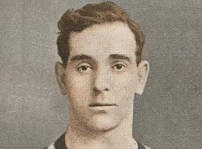 |
|
Timeline |
| |
Thomas William Boyle |
|
"EDUCATION IN THE HOYLAND |
DISTRICT.—John Hugh Burland,
compelling officer to the Hoyland School Board, prosecuted the
following persons for neglecting to comply with the provisions of
the Elementary Education Act:—Patrick
Boyle, of Platts Common, attendance order made." -
Barnsley Chronicle, Saturday, 22
July 1882. |
|
Birth |
Friday, 29 January 1886
in Platts Common, Hoyland, near Barnsley, West Riding of Yorkshire |
|
|
registered in Barnsley January-March 1886 |
|
|
According to the 1891 census,
Thomas is the youngest of five children to Irish-born Patrick (Peter) and Ellen
(née St.John). They all live,
alongside four lodgers (three coalminers and a blacksmith), on Wentworth
Road in Nether Hoyland. His father is a coal miner. |
|
|
According to the 1901 census,
Thomas, alongside his sister Mary, and their parents, are boarding with
the Penton's at 5 Royal Oak Yard in Nether Hoyland. His father is a coal
miner hewer, as is George Penton, head of the household. |
|
"MISCELLANEOUS. |
On Saturday, footballers
throughout the district felt sympathy for Thomas Boyle, the
popular captain and brilliant centre-half of the Barnsley Football
Club, on the loss of his mother. Mrs. Boyle, who resided at Platts
Common, died during the morning, and consequently Boyle did not
take any part in the national pastime that day. All will join in
offering condolences to Tommy in his sad bereavement." -
Barnsley Chronicle, Saturday, 8
January 1910. |
|
|
Thomas cannot be found on the
1911 census. But his widower father, Peter, is living with his married
daughter, Catherine and her family, at Blacksmiths Yard in Platts Common,
Hoyland.
His father died in 1913. |
|
Marriage |
to Annie
Elizabeth Varley, on Thursday, 1 March 1917 at St. James'
Church in Burnley, Lancashire, both living at 10 Rectory Road in
Burnley |
|
|
registered in Burnley January-March 1917 |
|
Children |
Tommy and Annie
Boyle have one daughter together. Decima Betty (b.summer 1921) |
|
"Hearty Congratulations. |
Bombardier Tom Boyle, the
famous Barnsley and Burnley captain and centre half-back , has
joined the ranks of the Benedickks, getting married at Burnley on
Thursday." -
The Green 'un, Saturday, 3 March
1917. |
"TOM BOYLE WOUNDED.
"Tom Boyle, captain of the Burnley Football
Club, has been wounded in the thigh. Writing to the secretary of the
Burnley club, Boyle, who is a gunner in the R.F.A., says he was bowled
over on August 1st and the pain was awful at the time. The hospital staff
says it is a bad wound, but he holds a different opinion and is keeping on
good spirits." - The
Yorkshire Telegraph and Star, Wednesday, 8 August 1917.
"Tom
Boyle has been wounded by a piece of shrapnel. Owing
to shell shock he is very deaf. Hearty wishes for a speedy recovery, Tom."
- The Sports Argus, Saturday, 1 September 1917.
"Tom Boyle is still in hospital at Newcastle. He has got
about, but cannot walk far as yet. William McCracken has paid Boyle
several visits during his enforced stay in the North-East." -
The Lancashire Daily Post, Saturday, 29 September 1917.
"Tom Boyle, the Burnley captain,
is recovering from his leg wounds, and is to undergo an operation to
improve his hearing." - The Lancashire Daily Post, Saturday,
24 November 1917.
"Tom Boyle is back in Edinburgh.
Writing to Mr. J. Haworth, of the Burnley F.C., he says he had an awful
Christmas, and was in bed two days with pains from which he had previously
suffered." - The Burnley News, Wednesday, 2 January 1918.
"Tom Boyle, the Burnley
F.C. centre-half, writes:—'I have gone up the line from the base. It
is a lot better up here than down. You do know when you have finished
here. We have plenty of football; we play the Canadians to-night. I met
Lol Cook here, and also Tabby Booth (Manchester City), J. Hay (Newcastle),
and Dodds (Celtic). They are in my lot, so we look like having some good
football.'"
- Burnley Express and Advertiser, Wednesday, 24
July 1918.
"EXPECTED EARLY RETURN OF TOM BOYLE.
"A letter was received by the Burnley F.C.
secretary, yesterday, from Tom Boyle, stating that he has been demobilised
and expects to be home this week-end. He has lately been stationed at a
place between Mons and Brussels."
- The Lancashire Daily Post, Friday, 28
February 1919. |
|
|
According to the 1921
census, Thomas William, a professional footballer (for Burnley FC) is now
married to Annie Elizabeth, and with his mother-in-law, they live at 68
Rectory Road in Burnley. |
|
"Tom Boyle's Bereavement. |
Tom Boyle, the ex-Barnsley and Burnley
captain, is laid aside with a knee injury. He has had a sad loss
in the death of his only child from pneumonia" -
Bradford Daily Argus, Friday, 31 March
1922. |
,%20Tommy.JPG) "The
appeal by Thomas William Boyle, licensee of the Pedestrian Inn,
Parker-lane, and ex-captain of the Burnley Football Club, against a
conviction and a fine of £10 imposed by the borough magistrates for
selling drink during prohibited hours, came before the Recorder, Mr. T.B.
Leigh, at the Burnley Quarter Sessions on Monday. After a long and careful
hearing, the Recorder upheld the magistrates' decision, and dismissed the
appeal." - The Burnley News, Wednesday, 23 October 1923. "The
appeal by Thomas William Boyle, licensee of the Pedestrian Inn,
Parker-lane, and ex-captain of the Burnley Football Club, against a
conviction and a fine of £10 imposed by the borough magistrates for
selling drink during prohibited hours, came before the Recorder, Mr. T.B.
Leigh, at the Burnley Quarter Sessions on Monday. After a long and careful
hearing, the Recorder upheld the magistrates' decision, and dismissed the
appeal." - The Burnley News, Wednesday, 23 October 1923.
"Tom
Boyle, the former Burnley centre-half and captain, and English
International, now described as a labourer, of Peter Street, Blackpool,
appeared before Blackpool magistrates yesterday on a charge of being drunk
and disorderly. Sergeant
Richmond said that two men, the other being William Hammond (28) of Kent
Road, were fighting together. Hammond appeared to be the aggressor. Hammond
in evidence, stated that he was in the Palastine Hotel lounge last night,
when Boyle came across to him and said he had won £50. They had several
drinks together, and when they got outside Boyle adopted a fighting
attitude. Boyle
began to use foul language to him, and they closed and began to fight. Boyle was fined 20s., and Hammond 10s. in the
first case, and costs in the second."
- The Burnley News, Saturday, 23 May 1931.
"Councillor John R.F. Hill, of Bispham, summoned Thomas
Boyle, the Burnley ex-International footballer, of no settled address, at
Blackpool Police Court, on Monday, for refusing to pay a taxi fare. The
amount claimed was £4, 19s. An order for payment was made. The
driver of the taxi cab said that Boyle got in with a woman, and instructed
him to go to Accrington. They called at two hotels in Accrington, and then
Boyle ordered him to go to Burnley, where they again called at hotels. At
Burnley he told Boyle that the amount was running up, and he said, "That's
all right. Who's paying?" Later, he was told that by the time he returned
to Blackpool the fare would be about £5, and Boyle replied: "£5?
You'll be lucky if you get £1." Subsequently the driver had to wait
outside an hotel for half an hour, and as Boyle did not return, he left
him. Boyle, in evidence, said he did not order the taxi, and that another
man did. He could not pay, as he was on the dole. The Bench ordered Boyle
to pay the £4 19s. owing, at the rate of £1 per month."
- The Burnley News, Saturday, 27 June 1931. |
|
|
According to the 1939 register, Thomas,
'formerly a professional footballer' is an inmate on Ward 17 at
County Mental Hospital in Whittingham. |
|
Death |
Tuesday, 2
January 1940 in Whittingham
Mental Hospital, Lancashire,
of 'General Paralysis of the Insane' |
|
Notes: |
It was his death
certificate that we can ascertain certain information, that is to say, he
is not the Thomas Wilkinson Boyle previously thought. Although his death
certificate states he was 51, he was in fact, 53, and the error stems from
him being of an unknown age inside a Mental Hospital. |
|
aged 53 years 338 days |
registered in Amounderness January-March 1940 |
|
Obituary |
"A
GREAT CAPTAIN
"PASSING OF TOMMY BOYLE
"SO Tommy
Boyle, one of football's richest personalities has died. Though he passed
away in Whittingham Hospital last week, his name will still live in the
memory of thousands of football followers. Whilst he achieved greatness in
an era outstanding for the high quality of pivotal play, the honours that
came his way did scant justice to his brilliance. Perhaps a reason might
be found in the fact that Boyle belonged to a Northern team that could not
lay claim to be in the forefront of fashion. Soccer selections, like their
fellow-judges of the summer pastime, certainly move in strange ways, and
to belong to a fashionable club is the golden key to international honours.
Be that as it may, Boyle did force his way to the ranks of the great, and
put Burnley soccer on the map as no other player could have done. The
modern conception of centre-half-back physique would reject Boyle out of
hand. He, too, no doubt would be equally emphatic in his disapproval of
some of the tactics that are nowadays supposed to constitute the duties of
a pivot. On the small side, of a stocky, thick-necked type, he was
nevertheless one of the greatest headers of a ball that has ever graced
the game. Many in this district would unhesitatingly put him first.
 "IN
all great elevens the minor things became important in the team that has a
proper major. How many times to-day do you see goalkeepers waste
goal-kicks by inaccurate and lackadaisical goal-kicking. Not so the
Burnley of such happy memory. Who can forget the uncanny manner in which
Dawson would find Boyle's head from a goal-kick, and how, with even more
amazing precision, the Burnley captain would find a forward's feet with a
commanding head-ball distribution. It was said that Boyle could head a
ball further and more accurately than some could kick it, and often
Mosscrop has been sent on a fleet-footed flash down the wing from a pass
that has come to his dainty feet straight from the head of his captain.
Yet Boyle used his head in more sense than one. He was a tactician who
gave no quarter, and scored its proference. His brilliant head-work,
whilst perhaps his outstanding characteristic, was but one of many
qualities that made him the dominant personality of a team, that like the
Villa, made the claret and blue famous. "IN
all great elevens the minor things became important in the team that has a
proper major. How many times to-day do you see goalkeepers waste
goal-kicks by inaccurate and lackadaisical goal-kicking. Not so the
Burnley of such happy memory. Who can forget the uncanny manner in which
Dawson would find Boyle's head from a goal-kick, and how, with even more
amazing precision, the Burnley captain would find a forward's feet with a
commanding head-ball distribution. It was said that Boyle could head a
ball further and more accurately than some could kick it, and often
Mosscrop has been sent on a fleet-footed flash down the wing from a pass
that has come to his dainty feet straight from the head of his captain.
Yet Boyle used his head in more sense than one. He was a tactician who
gave no quarter, and scored its proference. His brilliant head-work,
whilst perhaps his outstanding characteristic, was but one of many
qualities that made him the dominant personality of a team, that like the
Villa, made the claret and blue famous.
"BOYLE was also an adept at the
long, sweeping pass to the wing. I feel sure he would not claim any
special praise for that. Rather would he comment that any centre-half
lacking the ability to fling the ball out wingwards was no credit to the
game. Such ability in those days had to be an absolute basis for inclusion
in any top class side. To-day the stopper has even exceeded his
destructive duties, and he has become the slave of a system which has
within it the seeds of soccer decadence. Yet, with all his greatness,
Tommy did not relish the limelight. He was the first captain to receive
the English Cup from the hands of an English King. Incidentally,
the medals that Burnley received when they won the Cup by beating
Liverpool by one goal to nil at Crystal Palace in the fateful Spring of
1914, are unique in Soccer history, for they were minted wrongly, and
possess the inscription, F.A. Cup Medal, instead of Association Cup Medal.
,%20Tommy.jpg) "YET
Burnley's finest achievement under Boyle's captaincy, was to go thirty
matches without a defeat, in season 1920-21, when they won the First
Division championship. It was all the more remarkable, for they lost the
first three matches rather heavily, and I remember Bradford City trouncing
them at Turf Moor in one of those defeats. It was one of the sensations of
the day when Boyle signed for Burnley on September 23rd, 1911. He played
his first game for the Turfites on September 30th, and by coincidence it
was against his old club at Oakwell. The match was drawn. He was appointed
captain after a month's service, and during his first season Burnley just
missed promotion from the Second Division, but got it the season after. He
took them to the semi-final of the English Cup in the 1912-13 season, and
in the following season he captained the side which won the Cup. "YET
Burnley's finest achievement under Boyle's captaincy, was to go thirty
matches without a defeat, in season 1920-21, when they won the First
Division championship. It was all the more remarkable, for they lost the
first three matches rather heavily, and I remember Bradford City trouncing
them at Turf Moor in one of those defeats. It was one of the sensations of
the day when Boyle signed for Burnley on September 23rd, 1911. He played
his first game for the Turfites on September 30th, and by coincidence it
was against his old club at Oakwell. The match was drawn. He was appointed
captain after a month's service, and during his first season Burnley just
missed promotion from the Second Division, but got it the season after. He
took them to the semi-final of the English Cup in the 1912-13 season, and
in the following season he captained the side which won the Cup.
"HE
saw active service during the last war, and received severe wounds which
at one time, it was thought, would prevent him resuming football. After
the war, Burnley were continually in the limelight, with Boyle continuing
his association with Burnley until the season 1923-24, when he signed as
player-coach for Wrexham, and for a short period during 1924-5 he was a
coach in Germany. Shortly afterwards, Boyle's health broke down, and he
was under medical treatment practically the rest of his life."
- Nelson Leader, Friday, 12 January 1920 |
|
Funeral |
Friday, 19
January 1940,
in an unmarked grave at St Helen's Churchyard, Hoyland.
A headstone (above left)
was erected and dedicated in May 2010. The dedication ceremony was
attended by members of Tommy Boyle's family and by representatives of both
Barnsley FC and Burnley FC. |
|
"Did You Know... |
THAT there has been much
speculation among older supporters of the Burnley Football Club as
to the club's failure to have their flags flying at half-mast in
memory of the old Turf Moor idol, Tommy Boyle. The club were never
officially notified of Boyle's death, and further, during the week
in which Boyle died, Secretary A. Boland was off duty through
illness. The funeral of Boyle had taken place before news of his
death reached Burnley." -
Burnley Express and News, Wednesday, 17 January 1940 |
|
|
His wife, Annie, died on 5 August 1971 in Cardiff |
|
Source |
 Douglas Lammings' An
English Football Internationalist Who's Who [1990] & Douglas Lammings' An
English Football Internationalist Who's Who [1990] & |
|
Biographies |
Tommy
Boyle Broken Hero: Story of a Football Legend - Mike Smith
(Grosvenor House Publishing Ltd - 5 July 2011) |
|
Playing Career |
Club(s) |
Tommy
started his footballing career with Hoyland Star FC and then Elsecar FC in
the Barnsley League. Barnsley FC signed Boyle in May 1906 and then Burnley FC signed him on 23 September 1911 for a club record
transfer fee of £1150.
He became a club captain after a month, and remained for the war period and beyond, becoming the club's
coach in May 1922 after he sustained a knee injury that curtailed the
previous season. He was released on a free transfer in May 1923 and
despite several offers, he signed as a captain and player-coach with Wrexham AFC
on 10 June 1923. He was suspended by the the club on 16 October,
'for not turning out when picked in the last two matches for the reserve
team'.
"Tom Boyle has not come to an amicable settlement with Wrexham, and it is stated that he is not desirous of turning out again for the club." -
Burnley Express and Advertiser, Wednesday, 21 November 1923. |
League honours
376 appearances, 53 goals |
Barnsley FC
1906-11 159 appearances, seventeen goals
debut (division two): 24 November 1906 Chelsea FC 2 Barnsley FC 1.
Burnley FC 1911-21 210
appearances, 36 goals
debut (division two): 30 September 1911 Barnsley
FC 1 Burnley FC 1.
Wrexham AFC 1923 seven appearances
debut (division three north): 25
August 1923 Wrexham AFC 4 Ashington FC 0.
last (division three north):
19 September 1923 Wrexham AFC 0 Wigan Borough FC 0. |
|
Club honours |
FA Cup
runners-up 1909-10 (9ᵃ 1ᵍ), winners
1913-14 (8ᵃ 1ᵍ);
Football League Division Two
third place 1911-12 (29ᵃ 4ᵍ), runners-up 1912-13
(23ᵃ 6ᵍ); Division One runners-up 1919-20
(29ᵃ 5ᵍ), Champions
1920-21 (38ᵃ 7ᵍ), third place (26ᵃ 3ᵍ); |
|
Individual honours |
Football League
(three appearances, all against Scottish League, 1912-1914). |
|
Distinctions |
Became the first captain
to receive the FA Cup from a reigning monarch, King George V, in 1914. |
|
Height/Weight |
5'
7", 12st. 0lbs
[1911],
5'
7½", 11st.
4lbs [1914]. |
|
Source |
Douglas Lammings' An English
Football Internationalist Who's Who [1990]. |
|
England Career |
|
Player number |
One of seven who became
the 361st players (363)
to appear for England. |
|
Position(s) |
Centre-half |
|
Only match |
No. 114, 15 February 1913, Ireland
2 England 1, a British Championship
match at Windsor Park, Donegall Avenue, Belfast, aged 27 years
17 days. |
|
Major tournaments |
British Championship 1912-13; |
|
Team honours |
British Championship winners 1912-13; |
Individual honours |
The
Stripes (one appearance, January 1910);
A reserve for both The Whites and The Stripes in the January 1912 fixture.
The North (one
appearance, January 1913);
England Trial (one
substitute appearance, January 1914);
England Wartime
(one appearance, May 1916). |
|
Distinctions |
None |
|
Beyond England |
|
Was landlord of the Pedestrian Inn in
Burnley since 2 January 1922, until 25 December 1923. Coached in Germany for a spell from
1924. Became very successful at Bowling.
-
An English Football Internationalists' Who's Who.
Douglas Lamming (1990). Hatton Press, p.41. |
|
The Numbers |
|
parties |
Appearances |
comp. apps |
minutes |
 |
captain |
|
1 |
1 |
1 |
90 |
0 |
none |
|
The minutes here given
can only ever be a guideline and cannot therefore be accurate, only an
approximation. |
|
P |
W |
D |
L |
F |
A |
GD |
FTS
|
CS |
FAv |
AAv |
Pts% |
W/L |
|
1 |
0 |
0 |
1 |
1 |
2 |
-1 |
0 |
0 |
1 |
2 |
0 |
-1 |
|
his only match was played in the British Championship competition
and at an away venue |
Tournament Record
|
British Championship Competition |
|
Type |
P |
W |
D |
L |
F |
A |
GD |
FTS |
CS |
FAv |
AAv |
Pts% |
W/L |
|
BC 1909-10 |
0 |
0 |
0 |
0 |
0 |
0 |
=0 |
0 |
0 |
0.00 |
0.00 |
0.00 |
=0 |
|
BC 1912-13 |
1 |
0 |
0 |
1 |
1 |
2 |
-1 |
0 |
0 |
1.00 |
2.00 |
0.00 |
-1 |
|
BC
All |
1 |
0 |
0 |
1 |
1 |
2 |
-1 |
0 |
0 |
1.00 |
2.00 |
0.00 |
-1 |
|
All Competition |
|
Type |
P |
W |
D |
L |
F |
A |
GD |
FTS |
CS |
FAv |
AAv |
Pts% |
W/L |
|
BC |
1 |
0 |
0 |
1 |
1 |
2 |
-1 |
0 |
0 |
1.00 |
2.00 |
0.00 |
-1 |
|
1 |
0 |
0 |
1 |
1 |
2 |
-1 |
0 |
0 |
1 |
2 |
0 |
-1 |
Match History
|
apps |
match |
match details |
comp |
res. |
rundown |
pos |
|
Age 30 |
Wartime
Inter'nal |
13 May 1916 -
England 4 Scotland 3
Goodison Park, Liverpool |
Fr |
HW |
|
ch |
|
|
 England
Football Online
England
Football Online