 England
Football Online England
Football Online |
|
|
Page Last Updated 17 March 2024 |
Alba |
|
|
previous match
(364 days)
6 vs. Scotland
 |
7
|
 |
next match (322 days)
8 vs. Wales
9 vs.
Scotland |
Saturday,
2 March 1878
Association Friendly Match
Scotland 7 England 2
[4-0]
|
|
 |
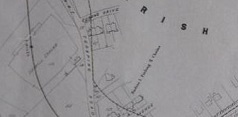
Hampden Park, Hampden Terrace,
Prospect Hill, Glasgow,
Lanarkshire
The first time England have played in
a purpose-built venue
Kick-off (London Time): 3:30pm.
Attendance:
'where
12,000 spectators assembled';
'it is computed that about 15,000
spectators were present'; 'An enormous crowd, variously estimated from
10,000 to 15,000 persons'; 'played before 20,000.' |
|
|
England's first visit to Hampden Park, but fourth to Glasgow, to Lanarkshire and to Scotland |
 |
Charles Campbell won the toss |
Arthur Cursham kicked-off |
 |
[1-0]
John McDougall 7
'safely landed'
[2-0]
John
McGregor 32
'breasted'
[3-0]
Harry McNiel 39
[4-0] John McDougall
41
'foot' |
Highet is also named as the scorer of the third goal,
as well as the fourth goal in some reports. |
[5-0] John McDougall 46
HATTRICK
| The very
first international hat-trick scored |
[6-0]
Billy MacKinnon 62
|
Thomas
Vallance injury - ten men 65 |
[7-1]
Harry McNiel 70
'rounded keeper' |
[6-1]
John George Wylie 65
'placed'
[7-2]
Arthur Cursham 75 |
|
new record established for most goals in a half - now five
goals scored |
|
"Fine, in general, with a slight shower through
the match. A stiff wind prevailed." |
Played according to SFA rules |
|
|
|
|
flg.jpg)  Match
Summary Match
Summary |
|
Officials
[umpires and referees are of equal relevance] |
Scotland |
Team Records |
England Party |
|
Umpires
|
|
Godfrey
William Turner
24 (mid-1854),
Slough
Edinburgh University |
Robert Bell Colquhoun
24
(4 March 1853), Lennox, Dumbarton |
Referee
William
Anderson
Dick
27 (17 July 1850), Whitevale, Glasgow (SFA Hon. secretary) |
|
|
|
|
Scotland
Team |
| |
|
Rank |
No official ranking system established;
ELO rating
1st |
Colours |
Dark
blue shirts, white shorts. |
|
Captain |
Charles Campbell |
Selection |
The
Scottish Football Association Selection Committee |
|
P 4 of 8, W 4 - D 0 - L 0 - F 16 - A 3. |
|
|
following four trial matches, the team chosen on Tuesday, 26
February 1878 |
|
Scotland
Lineup |
|
1 |
Gardner, Robert |
30
275 days |
31 May 1847 |
G |
Clydesdale FC |
5 |
11ᵍᵃ |
|
was an Umpire in the 1876 match |
oldest opp. player/gk so far |
final app
1872-78 |
|
39 |
|
McIntyre, Andrew |
22
205 days |
9 August 1855 |
Backs |
Vale of Leven FC |
1 |
0 |
|
4 |
Vallance, Thomas, injured off (eye
injury) 65th min |
21
279 days |
27 May 1856 |
Rangers FC |
3 |
0 |
|
4 |
Campbell, Charles |
24
41 days |
20 January 1854 |
Half
Backs |
Queen's Park FC |
5 |
1 |
|
5 |
Kennedy, Alexander |
24
354 days |
13 March 1853 |
Third Lanark Rifle Volunteers FC |
4 |
0 |
|
will be an umpire in the 1888 fixture |
|
|
Richmond, James Tassie |
19
345 days |
22 March 1858 |
Forward |
Queen's Park FC |
2 |
1 |
 |
McGregor, John Cunningham |
27
11 days |
20 February 1851 |
Vale of Leven FC |
3 |
1 |
|
|
McDougall,
John |
23
327 days |
9 April 1854 |
Vale of Leven FC |
3 |
3 |
|
the first hat-trick against England |
|
9 |
Highet, Thomas Cochrane |
24
198 days |
16 August 1853 |
Queen's Park FC |
4 |
1 |
|
final app
1875-78 |
|
|
MacKinnon, William Muir |
26
43 days |
18 January 1852 |
Queen's Park FC |
8 |
3 |
|
mst apps |
|
|
McNiel,
Henry |
24/25 |
1853 |
Queen's Park FC |
6 |
5 |
|
reserves: |
not known |
|
team notes: |
Thomas Vallance was hurt in the melee that
was England's first goal. He was forced to retire from the match
'getting a piece of turf in his eye'.
All the players from
Queen's Park FC, Charles Campbell, James Richmond, Tom Highet, Bill
MacKinnon and Harry McNiel, were all playing on their home ground. |
|
records: |
This is the first
England match to feature just one debutant in the opposition,
also a new Scottish record against England. .
They had started the
previous match, against Wales on 5 March 1877 with no new debutants,
thus becoming the first International team to play with new new
players involved.
Harry
McNiel has now scored
four
goals against England, making him the record opposing goalscorer. |
|
|
|
2-2-6 |
Gardner -
McIntyre, Vallance -
Campbell, Kennedy -
Richmond, McGregor, McDougall, Highet, MacKinnon, McNiel. |
|
Averages: |
Age |
24 years
195-228
days |
Appearances/Goals |
4.0 |
1.4 |
|
oldest opposing team
until 1879 |
most experienced opposing team
until 1882 |
|
|
|
|
England
Team |
| |
|
Rank |
No official ranking system established;
ELO rating
2nd |
Colours |
White shirts
with the English
Arms in black on the breast,
white shorts and dark blue caps. |
|
Captain |
Arthur Cursham |
Selection |
The
Football Association Committee
with secretary Charles W. Alcock having the primary influence |
|
P
1 of 2, W 0 - D 0 - L 1 - F 2 - A 7 |
P 7
of 31, W 1 - D 2 - L 4 - F 10 - A 19. |
|
sixth player to captain England
1 |
team chosen on Saturday evening, 23 February 1878 |
England
Lineup
(record-equalling low eight changes
to the previous match) |
|
eight |
|
Warner, Conrad |
27
322 days |
14 April 1850 |
G |
Upton Park FC |
1 |
7ᵍᵃ |
|
fifty |
only app
1878 |
|
51 |
|
Hunter,
John |
26
201 days |
13 August 1851 |
Full
Backs |
Heeley FC,
Providence
FC, Wednesday Club &
Sheffield Albion FC |
1 |
0 |
|
52 |
|
Lyttelton, Edward |
22
222 days |
23 July 1855 |
Cambridge University AFC
&
Old Etonians AFC |
1 |
0 |
|
only app
1878 |
|
4 |
Jarrett, Beaumont G. |
22
227 days |
18 July 1855 |
Half
Backs |
Cambridge University AFC &
Old Harrovians AFC |
3 |
0 |
|
final app 1876-78 |
|
53 |
|
Bailey, Norman C. |
20
222 days |
23 July 1857 |
Old Westminsters
AFC
&
Clapham Rovers FC |
1 |
0 |
|
54 |
|
Fairclough, Percy |
20
29 days |
1 February 1858 |
Forward |
Old
Foresters AFC |
1 |
0 |
|
only app
1878 |
|
55 |
|
Wylie, John George |
23
148 days |
5 October 1854 |
Wanderers FC &
Sheffield FC |
1 |
1 |
|
only app
1878 |
|
|
Cursham, Arthur W. |
24
353 days |
14 March 1853 |
Notts
County FC |
3 |
1 |
|
56 |
|
Wace, Henry |
24
162 days |
21 September 1853 |
Wanderers FC
&
Clapham Rovers FC |
1 |
0 |
|
10 |
Heron,
G. Hubert H. |
26
31 days |
30 January 1852
|
Wanderers
FC &
Swifts FC
|
5 |
0 |
|
was an umpire in the previous match |
most apps 1876-78 |
|
final app 1875-78 |
|
11 |
Mosforth,
William |
20
59 days |
2 January 1858 |
Sheffield Albion
FC |
2 |
0 |
|
reserves: |
not known |
|
team changes: |
The original line-up included
Cambridge University AFC's
Lindsay Bury and
Royal Engineers FC's
Robert Hedley. Their places went to Lyttlelton and
Wace. |
|
team notes: |
Hubert Heron's brother,
Frank, played for England in 1876. Edward Lyttelton's brother,
Alf, played for England a year later. Heron's were the third
brothers, to play, the Lyttelton's the fourth.
Cuthbert
Ottaway, England's first ever captain, died a month
after this match,
on 2 April 1878. |
|
records: |
This is the first time that England have lost
three matches in a row.
Arthur Cursham
on his third outing, becomes the most experienced England player to
score a goal.
Meanwhile, in his final outing Hubert Heron is the
most experienced player to have not scored a goal. |
|
|
|
2-2-6 |
Warner -
Hunter,
Lyttelton -
Jarrett, Bailey -
Fairclough, Wylie,
Cursham, Wace,
Mosforth, Heron. |
|
Averages: |
Age |
23 years 213
days |
Appearances/Goals |
1.8 |
0.2 |
|
most experienced team
until next match |
|
"The Englishmen were entertained at dinner by
the Scottish Association, at the Royal Hotel." -
Monday, 4 March 1878, Sheffield Daily
Telegraph. |
|
|
|
|
Match Report
The Times, Monday,
4 March 1878 |
|
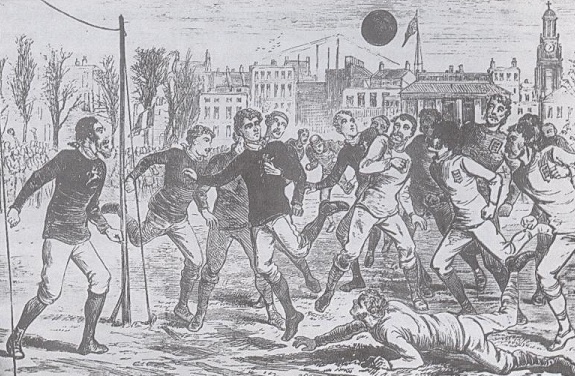 About 15,000
spectators were present at Hampden-park, near Glasgow, on Saturday, to
witness the seventh annual match between England and Scotland, under
Association Rules. Unfortunately, heavy rains on Thursday and Friday
caused the ground to be in a very moist, slippery condition on the
Saturday. A close contest had been anticipated, although it was
generally admitted that the English possessed a stronger team than
their rivals. The home team always have an advantage, however, in
having a larger number of players to select from, owing to the
difficulty in getting players to travel so far north or south, as the
case may be. The consequence was that Scotland sent a very formidable
11 into the field, and as they were lighter and passed the ball better
than the Southerners, the result was an easy victory. About 15,000
spectators were present at Hampden-park, near Glasgow, on Saturday, to
witness the seventh annual match between England and Scotland, under
Association Rules. Unfortunately, heavy rains on Thursday and Friday
caused the ground to be in a very moist, slippery condition on the
Saturday. A close contest had been anticipated, although it was
generally admitted that the English possessed a stronger team than
their rivals. The home team always have an advantage, however, in
having a larger number of players to select from, owing to the
difficulty in getting players to travel so far north or south, as the
case may be. The consequence was that Scotland sent a very formidable
11 into the field, and as they were lighter and passed the ball better
than the Southerners, the result was an easy victory.
The Scotch were
successful in the toss, and chose to play at first with the wind,
which blew rather strongly, at their backs. With this powerful ally
they soon pushed the warfare into the enemy's territory, and it was
not long before M'Dougal kicked a goal for Scotland. This was soon
after followed by a second goal obtained by M'Gregor. The English now
strove hard to stem the tide, which appeared to have set in so
unfavourably against them. They were unable to do so, however, as
before half-time had arrived the Scotch had doubled their previous
score, M'Neil and Highet each being credited with a goal. With the
change of ends and with the wind at their backs it was expected that a
change would follow in the fortunes of the Southerners. But their
hopes were soon dispelled, as a minute had hardly passed before
M'Dougal kicked a fifth goal for Scotland, and M'Kinnon a few minutes
later obtained a sixth. A check to these continued successes was now
made through a combined rush on the part of the English forwards, and
Wace getting in possession of the ball, kicked it between the posts.
This success, however, was of short duration, as M'Neil quickly scored
a seventh goal for Scotland. Before the conclusion of the match the
Southerners made another raid into their opponents' territory, and a
second goal was secured. "Time" was soon afterwards called, and the
Scotch were pronounced victors by seven goals to two. Of the seven
matches which have been played, Scotland claims four victories,
England one, and two games have been drawn.
|
|
|
Match Report
Bell's Life in London and Sporting Chronicle,
Sunday, 3 March 1878 |
"The England players we had down this time were a splendid lot of players
individually, but to my idea they played very selfishly, each one of them
appearing to play for himself and not for the success of the side" -
'A Disgusted Englishman'
"The cause was
not so much the want of English pluck and endurance as the superiority
shown by the Scotch in playing together, power, and the result of
incessant practise. The strangers fought bravely and well but the
hardy Scots fought better, and the game was won." |
|
|
|
In Other News....
|
It was on 3 March 1878 that Russian
forces liberated Bulgaria at the Treaty of San Stefano after
500 years as part of the Ottoman Empire. |
|
|
|
|
Source Notes |
|
J.Turner Umpire:- J.Turner, Swifts and G.Turner, Edinburgh University,
the umpire in 1878, are both the same person... Godfrey William,
baptised 26 July 1854 in his birthplace, Upton-cum-Chalvey (now a suburb
of Slough), sometime in that quarter prior. Godfrey, and his younger
brother, Charles George (b.1859), established football in the
rugby-stronghold city of Edinburgh. They were both at Edinburgh
University and established its first football club and arranged its
first fixture (vs. Glasgow University). Godfrey was unanimously
voted in as the club's first captain. He died on 17 July 1936 and is
buried in St Mary's Churchyard in Slough. |
|
|
|
|
The Football Association
Yearbook
original newspaper report & Independent, 4 March 1878
Douglas Lamming's A Century of English International
Football 1872-1988
Douglas Lamming's
A Scottish Internationalists' Who's Who 1872-1986
Cris Freddi's England Football Factbook
Nick
Gibbs England: The Football Facts |
|
|
John Maxwell's Scottish International Football Archive (website)
Jack
Rollin's Rothmans Book of Football Records
The
Scottish Football Association, Scottish Match Archive
James Corbett's England Expects
The
Official History of the England Football Team (DVD)
LondonHearts.com
John Treleven |
|
|
cg |