 England
Football Online England
Football Online |
|
|
Page Last Updated 6 May 2024 |
Alba |
|
|
13 vs.
Scotland
previous match
(21 days)
14 vs.
Ireland
 |
15 |
 |
next match
(two days)
16 vs.
Wales
19 vs. Scotland |
Saturday,
11 March 1882
Association Friendly Match
Scotland 5
England 1
[2-1]
|
.jpg) |
|
 |
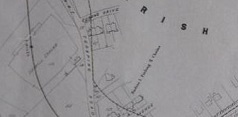
Hampden Park, Hampden Terrace, Prospect Hill, Glasgow,
Lanarkshire
Kick-off (GMT):
'soon after half-past three'
Attendance:
'estimated that 10,000 persons were inside
the ground'; 'before about 12,000 spectators'; 'presence of 12,000
spectators'. |
 |
England's third and final visit to Hampden Park, all defeats;
England's sixth visit to Glasgow, to Lanarkshire and to Scotland,
still without a victory |
 |
Charles Campbell won the toss |
Arthur Brown
kicked-off |
 |
[0-0] McIntyre free-kick scores:
disallowed
[1-0] William Harrower
15
'shot through'
- an appeal for offside was
allowed by England's umpire, but not upheld by the referee.
| England's fourth
ever equalising goal> |
[2-1] Geordie Kerr
43
'placed' |
[1≡1]
Howard
Vaughton
35
'Gillespie
caught it with his foot, he slipped and the ball was smartly put thro
by Vaughton' |
[3-1] Robert McPherson
46
'kicked' -
disputed but allowed by the referee
[4-1] Geordie Kerr
70
'beautiful shot'
[5-1]
Johnny Kay 85
'sent the ball through'
- offside, allowed by the ref. |
[5-1] after a
scrimmage the ball hit the post |
|
|
Played according to FA rules. |
|
|
|
|
 flg.jpg) Match
Summary Match
Summary |
|
Officials
[umpires and referees are of equal relevance] |
 |
Team Records
|
England |
|
Umpires
|
An experimental law is introduced, that empowers the referee to award a goal
in cases where, in his opinion, a goal has been prevented from a deliberate
handball by the defending team. It lasts one season only, and it is
unknown as to whether it resulted in any England goals in 1881-82. |
Segar
Richard
Bastard
28
(25 January 1854)
Upton Park FC
(replaced Major Marindin) |
Thomas Anderson
(Renfrew
FC President) |
|
played against Scotland in 1880 |
Referee
John Wallace
Third Lanark RV, Beith (SFA vice-president). |
|
|
|
|
Scotland
Team |
| |
|
Rank |
No official ranking system established;
ELO rating
1st |
Colours |
'the Scotchmen having adopted a new jersey, the
well-known blue and white stripes of the Edinburgh Academicals, with the
Scottish lion worked in gold as a badge.' |
|
Captain |
Charles Campbell |
Selection |
The Scottish Football Association
Selection Committee |
|
P 7 of 8, W 6 - D 0 - L 1 - F 31 - A 10 |
team chosen following a trial match on Tuesday, 7 March 1882 |
|
"The committee do not chose players because they
play well in a trial match; they choose them on the form revealed throughout
the season." - Wednesday, 8 March,
1882, The Athletic News |
|
Scotland
Lineup |
|
|
Gillespie, George |
23
344 days |
1 April 1858 |
G |
Rangers FC |
4 |
4ᵍᵃ |
|
|
Watson, Andrew |
25
291 days |
24 May 1856
in Demerara, British Guiana |
RB |
Queen's Park FC |
3 |
0 |
|
final app
1881-82 |
|
|
McIntyre, Andrew |
26
214 days |
9 August 1855 |
LB |
Vale of Leven FC |
2 |
0 |
|
|
Campbell, Charles |
28
50 days |
20 January 1854 |
Half
Back |
Queen's Park FC |
9 |
1 |
|
63 |
|
Miller, Peter |
24
37 days |
2 February 1858 |
Dumbarton FC |
1 |
0 |
|
|
Fraser, Malcolm John Eadie |
22
7 days |
4 March 1860
in Ontario, Canada |
OR |
Queen's Park FC |
2 |
0 |
|
64 |
|
Anderson, William |
19
320 days |
25 April 1862 |
IR |
Queen's Park FC |
1 |
0 |
 |
Kerr,
George |
22
13 days |
26 February 1860 |
Centre
Forward |
Queen's Park FC |
4 |
9 |
|
65 |
|
Harrower,
William |
20
144 days |
18 October 1861 |
Queen's Park FC |
1 |
1 |
|
tenth debutant to score against England |
|
|
Kay,
John Leck |
24
186 days |
6 September 1857 |
IL |
Queen's Park FC |
2 |
2 |
|
66 |
|
McPherson,
Robert |
22
269 days |
15 June 1858 |
OL |
Arthurlie FC |
1 |
1 |
|
only app
1882 |
|
reserves: |
not known |
|
team notes: |
George Kerr is often
found as Ker in history books - but definitely baptised a Kerr in
Govan. He is the younger brother of William,
who played
for Scotland in the first two fixtures.
The seven Queen's Park
FC players were all playing on their home ground. |
|
records: |
George Kerr has now scored
seven
goals against England, making him the record opposing goalscorer. |
|
|
|
2-2-6 |
Gillespie -
Watson, MacIntyre -
Campbell, Miller -
Fraser, Anderson, Kerr, Harrower, Kay, McPherson. |
|
Averages: |
Age |
23
years 270 days |
Appearances/Goals |
2.7 |
0.7 |
|
|
|
|
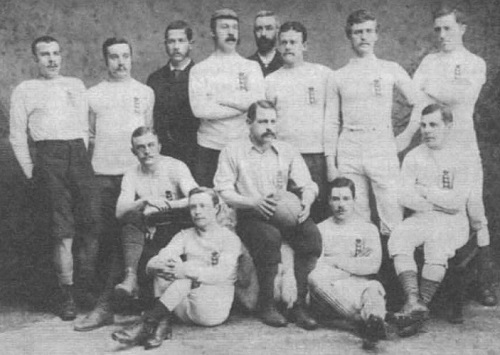
England
Team |
| |
|
Rank |
No official ranking system established;
ELO rating
2nd |
Colours |
'dressed in white jerseys and blue knickerbockers' |
|
Captain |
Norman Bailey |
Selection |
Following a
trial match,
The Football Association Committee, with Secretary Charles W. Alcock having the primary
influence |
|
P 2 of 15, W 0 - D 0 - L 2 - F 2 - A 11. |
P 15 of 31, W 5 - D 2 - L 8 - F 39 - A 43. |
|
|
two teams were chosen at 23 Paternaster Row on Tuesday, 7 March
1882. |
England
Lineup
(a record-equalling
low six changes to the previous match) |
|
|
Swepstone, H. Albemarle |
23
56 days |
14 January 1859 |
G |
Pilgrims FC &
Corinthians FC |
2 |
10ᵍᵃ |
|
=most gk apps |
|
|
Greenwood, Doctor
H.,
injured |
21
131 days |
31 October 1860 |
RB |
Blackburn Rovers FC |
2 |
0 |
|
final app 1882 |
|
97 |
|
Jones,
Alfred |
21
55 days |
15 January 1861 |
LB |
Walsall Swifts FC |
1 |
0 |
|
|
Bailey, Norman
C. |
24
231 days |
23 July 1857 |
Half
Back |
Clapham Rovers FC |
6 |
0 |
|
|
Hunter,
John |
30
210 days |
13 August 1851 |
Heeley FC,
Providence FC,
Wednesday FC &
Sheffield Albion FC |
6 |
0 |
|
|
Cursham,
Henry A. |
22
104 days |
27 November 1859 |
OR |
Notts County FC &
Corinthians FC |
3 |
1 |
|
|
Parry, Edward
H. |
26
321 days |
24 April 1855
in Toronto, Canada |
IR |
Old Carthusians
AFC, Swifts FC &
Remnants FC |
2 |
0 |
|
|
Vaughton,
O. Howard |
21
61 days |
9 January 1861 |
Centre
Forward |
Aston Villa FC |
2 |
6 |
|
=mst
gls |
|
|
Brown,
Arthur |
23
98 days |
3 December 1858 |
Aston Villa FC |
2 |
4 |
|
|
Bambridge,
E. Charles |
23
224 days |
30 July 1858 |
IL |
Swifts FC |
5 |
6 |
|
=mst gls |
|
|
Mosforth,
William |
24
68 days |
2 January 1858 |
OL |
Wednesday FC |
8 |
2 |
|
mst apps |
|
reserves: |
Arthur Mallinson (Barnsley Wanderers FC &
Heeley FC,
goal),
Edwin Buttery (Heeley
FC, half-back),
William Page,
Ernest Wilson (both
Old Carthusians AFC, forwards)
and
Percivall Parr (Oxford University AFC, centre). |
|
team changes: |
Old Carthusians AFC's
James Prinsep withdrew from the original line-up because of
injury, his place going to Hunter. Greenwood took the place of
Royal Engineers FC's
Bruce Russell - both changes being announced the day before the
match.
"Buttery
magnanimously stood out to allow Greenwood playing thus displaying a
self-abnegation rarely found." |
|
team notes: |
Charlie Bambridge's brother,
Ernest, played for England in 1876. Harry Cursham's brother,
Arthur, also played for England 1876-79. |
|
appearance notes: |
Charlie Bambridge is
the fifth player to have made five England appearances, whereas Harry
Cursham is the thirteenth to have made three appearances.
Albemarle Swepstone becomes
only the
second goalkeeper
to earn a second appearance. |
|
records: |
For the first time, England have started
with only one debutant, having not done so with less than two so
far, thus making this the most experienced England
team so far.
The first time England have scored
fourteen goals in a season, and scored by a new seasonal/year record
of seven goalscorers.
On their sixth appearances, both Norman
Bailey and Jack Hunter become the most experienced England players to
have not scored a goal. |
|
"The English team, it is expected, will
arrive at the Central Station from London at eight o'clock to-night,
and take up their quarters at the Bath Hotel." - Friday, 10 March
1882, Glasgow Evening Citizen |
|
|
|
2-2-6 |
Swepstone -
Greenwood, Jones -
Bailey, Hunter -
Cursham, Parry, Vaughton, Brown, Bambridge, Mosforth. |
|
Averages: |
Age |
23 years 308 days |
Appearances/Goals |
3.5 |
1.6 |
|
most experienced so far |
|
"In the evening the teams were entertained to dinner in Robertson's
Bath Hotel, Bath Street, by the Scottish Football Association. About eighty
were present." - The Scotsman, Monday, 13 March 1882 |
|
|
|
England previous teams
vs. Scotland: |
|
1881: |
Hawtrey |
Wilson |
Field |
Hunter |
Bailey |
Holden |
Rostron |
Macauley |
Mitchell |
Bambridge |
Hargreaves |
|
1882: |
Swepstone |
Greenwood |
Jones |
Bailey |
Hunter |
Cursham |
Parry |
Vaughton |
Brown |
Mosforth |
|
|
|
|
Match Report
Morning Post, Monday, 13 March 1882
|
|
 The
annual match
under
Association rules between
England and Scotland was played on Saturday afternoon at Hampden Park,
Glasgow, in the presence of about 12,000 spectators. The weather was
fine, and the ground in good condition. Scotland were successful in
the toss, and at first elected to play with the wind in their favour.
The home team speedily invaded their rivals' territory, and made
repeated attacks on their goal, which for some time was saved by the
dexterity of Swepstone. Good runs were then made by Parry and Cursham,
by they were stopped by the Scottish backs. Bailey also ran the ball
well down the ground, but took his kick too hurriedly, and it went
over the cross-bar. Once more the home forwards acted on the
aggressive, and a corner-kick seemed to imperil their fortress, but
Swepstone proved equal to the occasion. At length, however, there are
some determined play in front of the English posts, and out of a loose
scrimmage the ball was shot through by Harrower. Very clever runs were
made by Cursham and Bambridge down the centre of the ground, the ball
being well passed from one to the other with great skill. Mosforth
also made a fine attempt to score, and shot the ball into the hands of
the goalkeeper, who threw it well away. He returned to the charge, and
this time succeeded in sending the ball between the posts. The score
having thus been brought level, the play became even more determined.
A little before the time arrived for changing ends Kerr placed a
second goal to the credit of Scotland. The sides having crossed over,
the home team had the wind against them, but this did not prevent
Harrower from immediately kicking a third goal, and the game had not
proceeded much further before Ker added a fourth, and within five
minutes of the cessation of hostilities Kaye sent the ball through.
This was the last score, and thus, when time was called, victory
rested with the Scotch by five goals to one. The
annual match
under
Association rules between
England and Scotland was played on Saturday afternoon at Hampden Park,
Glasgow, in the presence of about 12,000 spectators. The weather was
fine, and the ground in good condition. Scotland were successful in
the toss, and at first elected to play with the wind in their favour.
The home team speedily invaded their rivals' territory, and made
repeated attacks on their goal, which for some time was saved by the
dexterity of Swepstone. Good runs were then made by Parry and Cursham,
by they were stopped by the Scottish backs. Bailey also ran the ball
well down the ground, but took his kick too hurriedly, and it went
over the cross-bar. Once more the home forwards acted on the
aggressive, and a corner-kick seemed to imperil their fortress, but
Swepstone proved equal to the occasion. At length, however, there are
some determined play in front of the English posts, and out of a loose
scrimmage the ball was shot through by Harrower. Very clever runs were
made by Cursham and Bambridge down the centre of the ground, the ball
being well passed from one to the other with great skill. Mosforth
also made a fine attempt to score, and shot the ball into the hands of
the goalkeeper, who threw it well away. He returned to the charge, and
this time succeeded in sending the ball between the posts. The score
having thus been brought level, the play became even more determined.
A little before the time arrived for changing ends Kerr placed a
second goal to the credit of Scotland. The sides having crossed over,
the home team had the wind against them, but this did not prevent
Harrower from immediately kicking a third goal, and the game had not
proceeded much further before Ker added a fourth, and within five
minutes of the cessation of hostilities Kaye sent the ball through.
This was the last score, and thus, when time was called, victory
rested with the Scotch by five goals to one.
|
|
|
Match Report
The Times, Monday, 13 March 1882
|
The international football match between
England and Scotland, under Association rules, was played at Glasgow
on Saturday before 15,000 spectators. Both countries were well
represented, but the Scotchmen were the favourites. A stiff breeze
prevailed during the progress of the game, but even with this
advantage in their favour the Scotchmen did not make much of it,
half-time being called with the score at - Scotland, two goals;
England, one. The second half, however, proved disastrous to the
Englishmen, who seemed to have shot their bolt in defending their goal
in the first half, because they did not play so well and could not
retain the ball when they did get possession. The consequence was that
a third goal was soon added, and in a short time a fourth fell to the
Scotchmen, who, hemming in their opponents, surrounded their goal
continually. Five minutes before the call of time a fifth goal fell to
Scotland, and the match was brought to a close before the Englishmen
could increase their score of one goal.
|
|
North British Daily Mail, Monday, 13 March 1882
|
|
There can be
little doubt, if the contest had been played under Scottish rules, it
certainly would have been a much prettier game to look at. |
|
|
|
In Other News....
|
It was on 10 March 1882 that Roderick
Maclean was charged with high treason in attempting to assassinate Queen
victoria by shooting at her carriage the previous week. He was found
'not guilty, but insane' and sent to Broadmoor Asylum for the rest of
his life. |
|
|
|
|
Source Notes
|
TheFA
Scottish FA
Cris Freddi's England Football Factbook
Andy Mitchell's extensive research
JAH Catton's
The Story of Association Football
100 Great Black Britons |
|
Professional Footballer's Association
LondonHearts.com
The Football Association Yearbook
James Corbett's England Expects
Original Newspaper Reports
Anton Gorovik & John Treleven |
|
|
cg |