|
|
 |
 font
supplied by Daniel Gellatley font
supplied by Daniel Gellatley
.jpg) P 44 W 29 D 8
L 7 F 84:A 31 P 44 W 29 D 8
L 7 F 84:A 31
75% successful |
|
Description |
 |
 |
 |
|
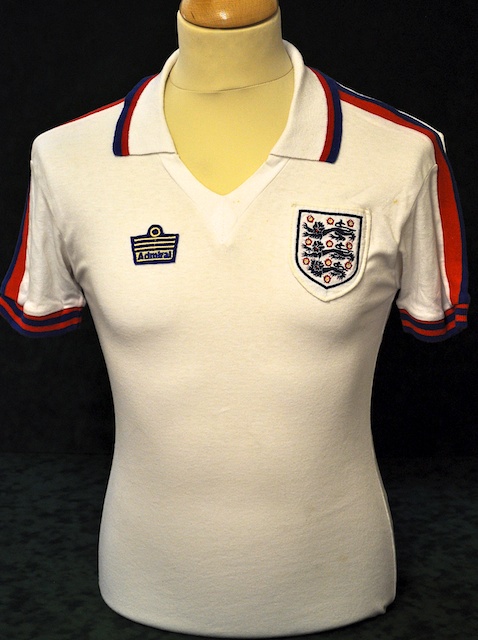
- White
long or short-sleeved shirt.
Deep white
v-neck, with a winged collar, edged with a red and royal-blue stripe. Red and royal-blue stripe
from neck down to cuffs along each sleeve seam. Red and royal-blue
striped cuffs, shortened to two of each colour stripe on short
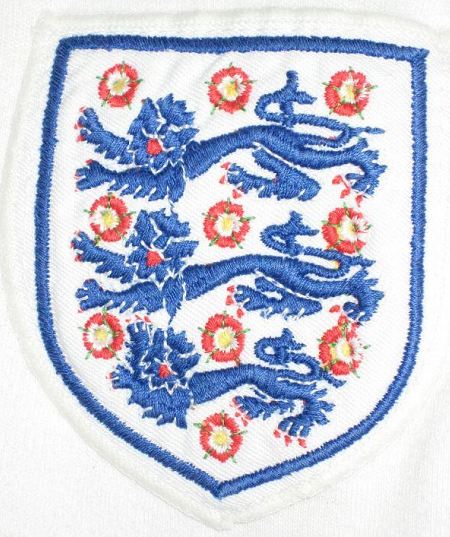
sleeves. Emblem
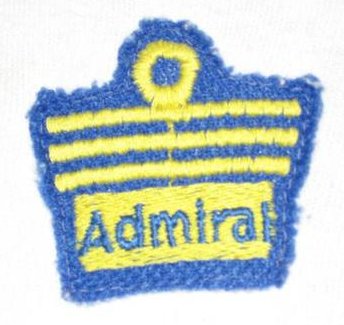
on left breast on a white embroidered patch. Ironed-on yellow or white logo
on right breast, overlaid
with 'Admiral' in navy-blue (black on white logo) title-case lettering
at the bottom, all within a navy-blue border (black border on white
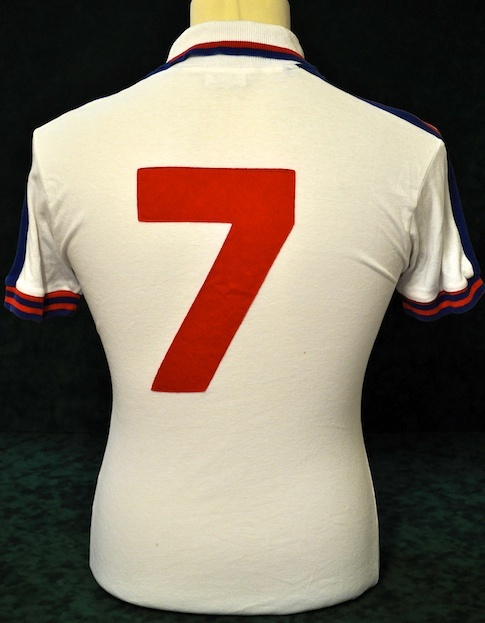
logo). Red numbers on back
in standard Admiral font.
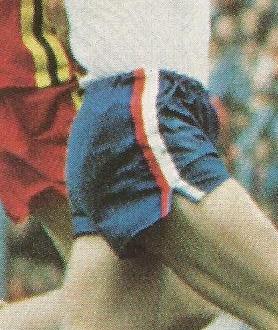
- Royal blue shorts,
with white drawstring, and a white and red stripe down the seams.
Ironed-on yellow or white logo on left thigh, overlaid
with 'Admiral' in navy-blue (black on white logo) title-case lettering
at the bottom, all within a navy-blue border (black
border on white logo).
- White socks, with
red and royal blue-stripe across tops.
|
|
Variations |
Because each player was given a choice of
sleeve length, and later shirt material, for each game - choices that were
also changed at half-time by a number of players - it is virtually
impossible to define exactly what each player wore in each half of every
international. Video and photographic evidence is simply not clear enough
for all. It is possible, however, to identify the sleeve lengths worn in
every game (see below) and also the games where each variation was
introduced. Throughout the first season (1974-75), it appears that players
wore identical uniforms at the start of each match, in terms of Admiral
logos and shirt material (though sleeve lengths could be different, as of
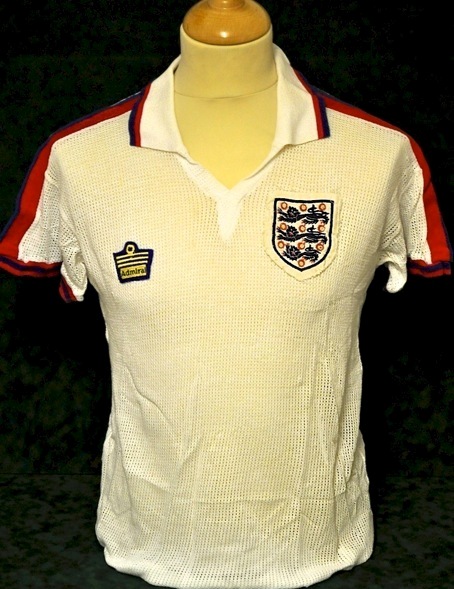
course, numbers were). The entire team probably also wore the lightweight
shirts throughout the American Bicentennial Tournament in 1976. For the
other games, the following variations were observed:
- Yellow vinyl Admiral logos
were worn on the shirts and shorts for the first two games in which
this kit was worn.
- For the next two
games (against West Germany and Cyprus) white vinyl logos were worn on the
shirts and yellow vinyl logos on the shorts at the beginning of the games.
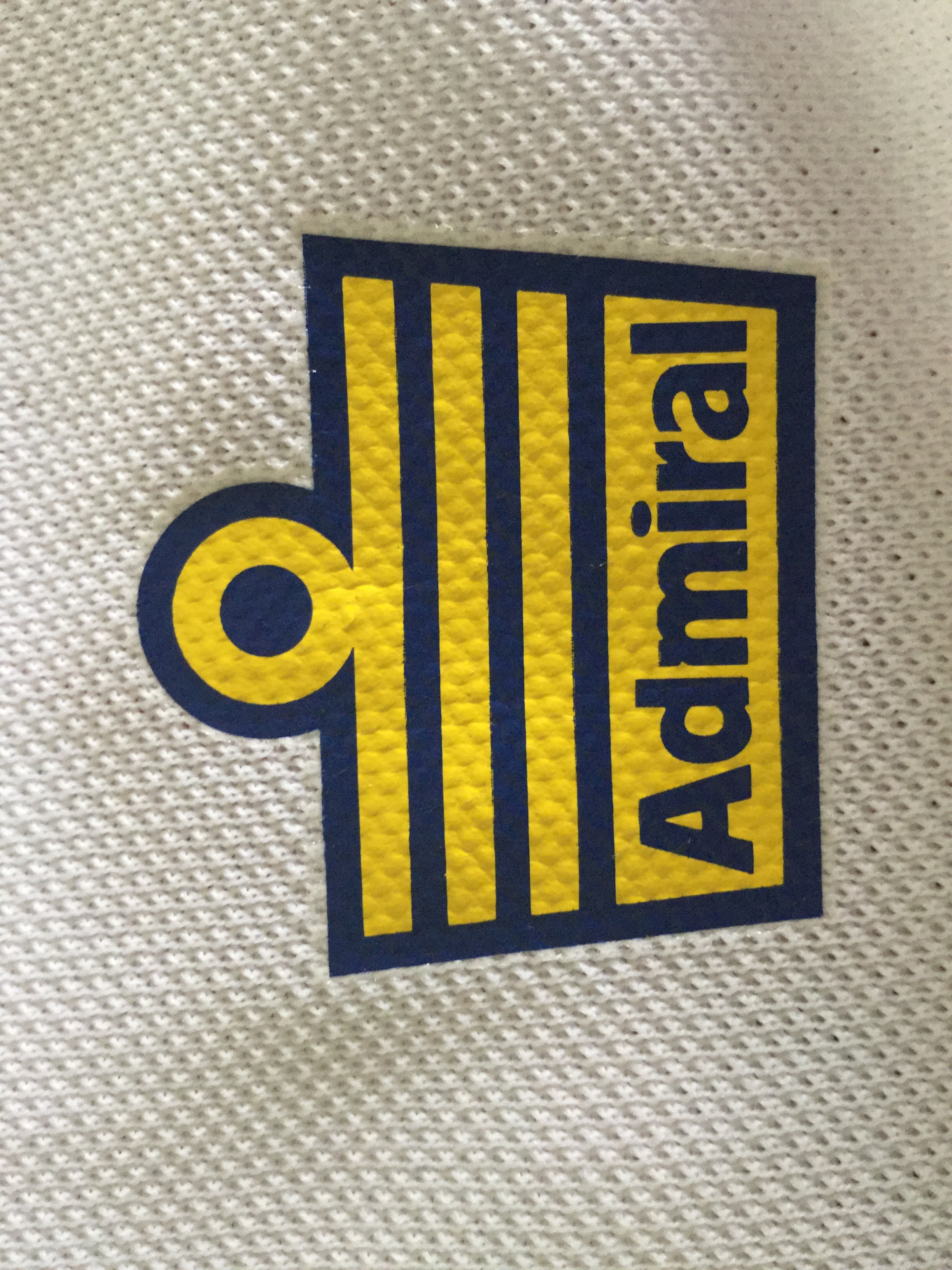
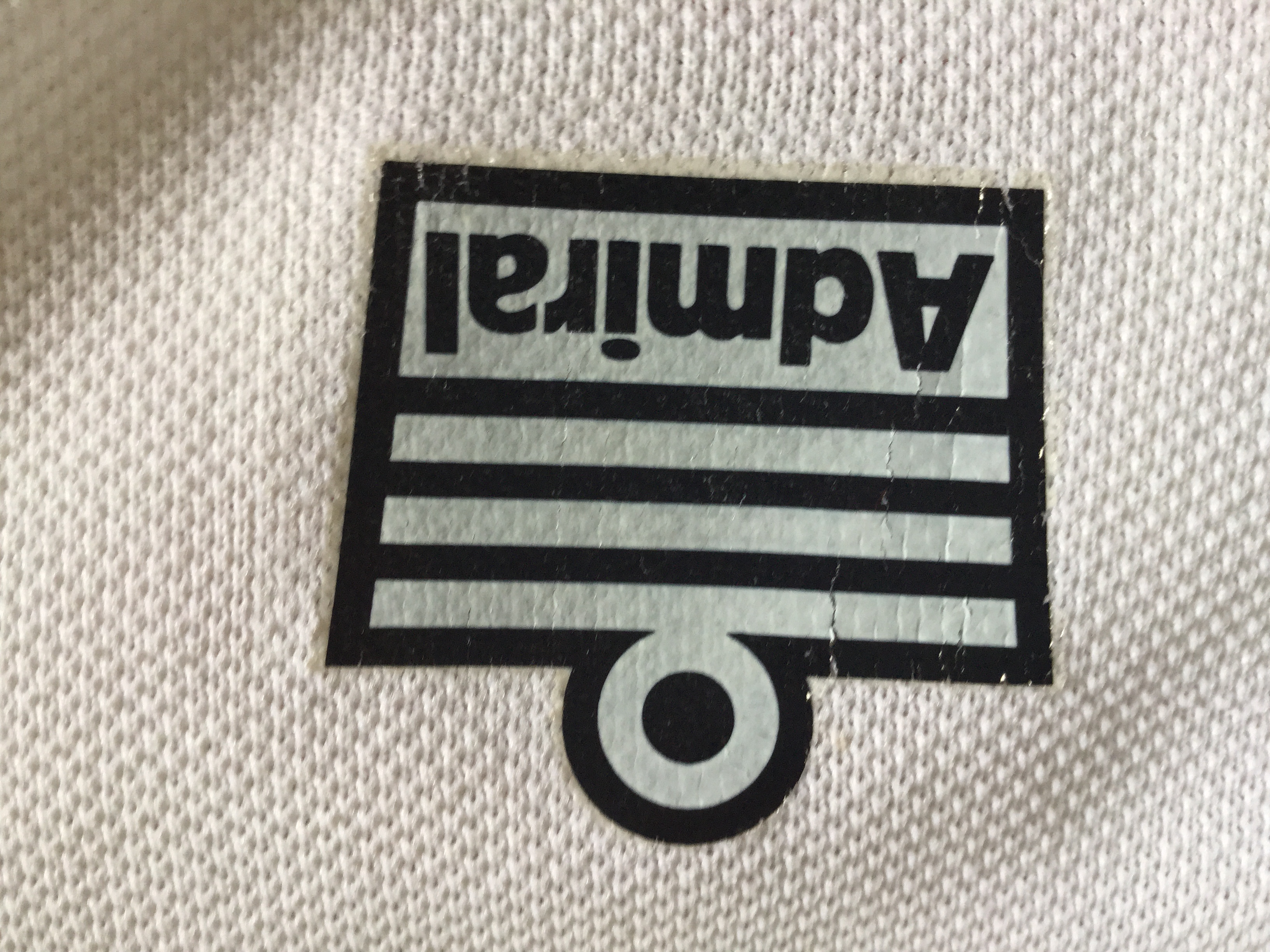
-
Against West
Germany in 1975, every outfield player, except Alan Ball and Colin Bell,
wore yellow vinyl logos on their shirts for the second half (Kevin Keegan
changed from long to short sleeves).
- At
the beginning of each of the four games played
in May 1975, plus the following match, four months later, against
Switzerland, England wore short-sleeved shirts of a new lighter material,
similar to Umbro's Airtex shirts. The Admiral shirt logos were yellow,
embroidered, with a royal-blue border, and with 'Admiral' overlaid in
royal blue, whilst on the shorts, they were in white vinyl.
- In
the match against Wales in 1975, the Admiral
logos worn on the shirts did not include the 'Admiral' lettering.
-
In the next
match, against Scotland, three days later, there were no Admiral logos
worn on the shirts at all.
-
Against
Czechoslovakia in Bratislava, in 1975, for both an abandoned game and when
it was replayed the following day, over half of the team (including Colin
Bell, Mick Channon, Allan Clarke, Gerry Francis, Kevin Keegan and Malcolm
Macdonald) wore lightweight shirts with no emblem on the left breast. All
of the team wore yellow Admiral logos on the right breast and white
Admiral logos on the shorts.
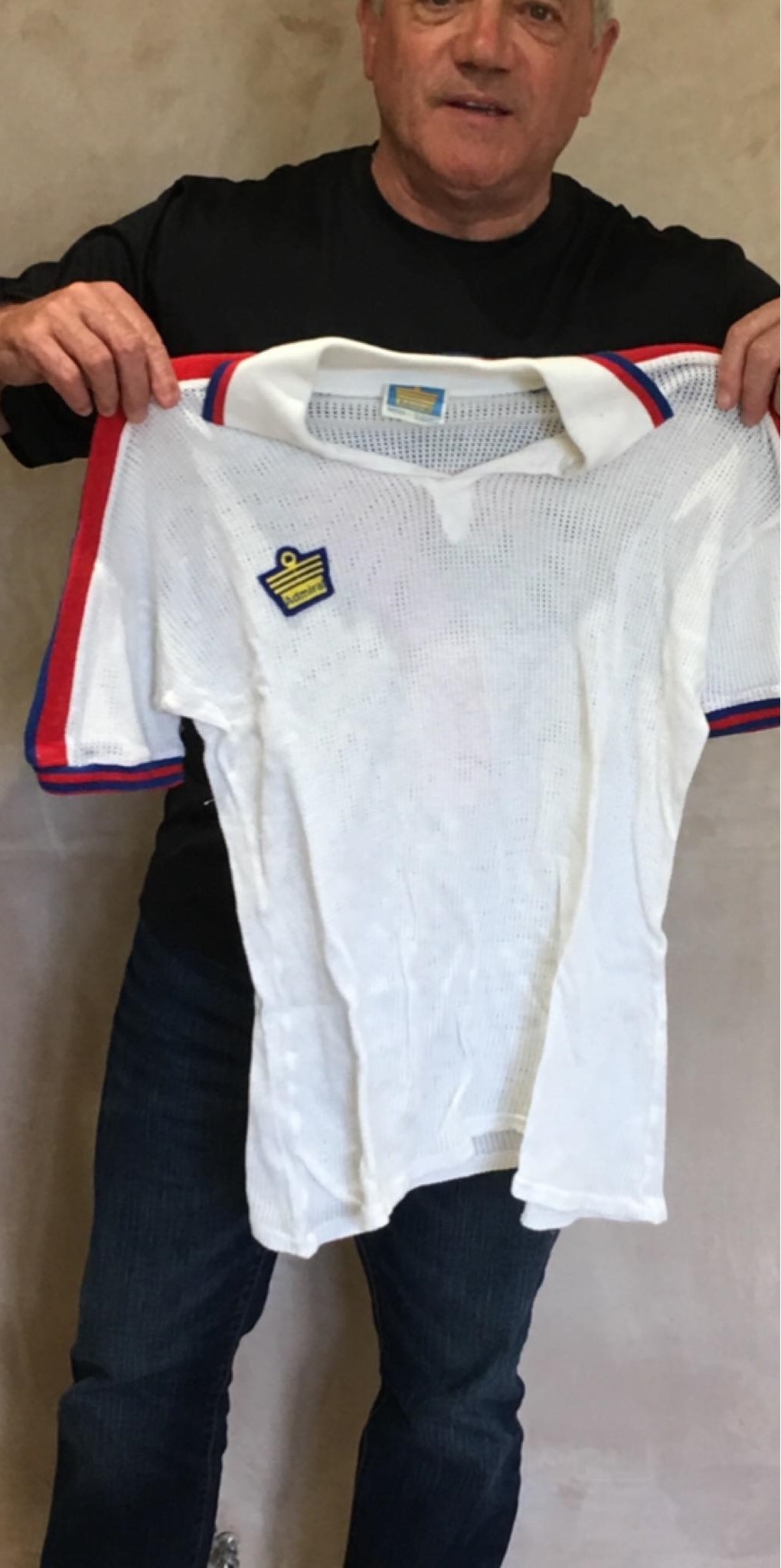
Kevin Keegan with
the shirt that he wore in Bratislava (picture kindly supplied by Richard
Becheley).
-
White vinyl
Admiral logos were worn on the shirts against Portugal in 1975, and both
white and yellow embroidered and vinyl versions continued to be worn throughout the
period, often differing in the same match. When lightweight shirts were worn, the
Admiral logos were always yellow and embroidered, as they were on all
shirts from 1978.
-
Against Italy
in New York, in 1976, Mick Channon, captaining his country for the first
time, wore a shirt without an emblem for the
second half, and scored twice.
-
From the 1977
British Championship onwards, the seams on England's shorts had a narrower
white and red stripe, though the older, wider stripes were also worn until
the end of the year, when the white Admiral logos last appeared on the
shorts.
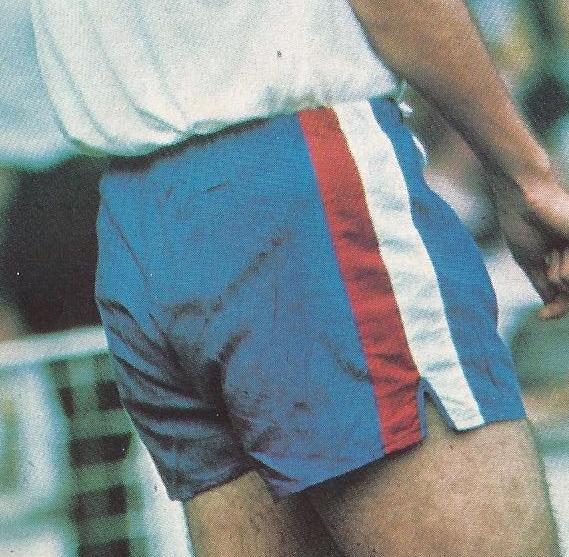
-
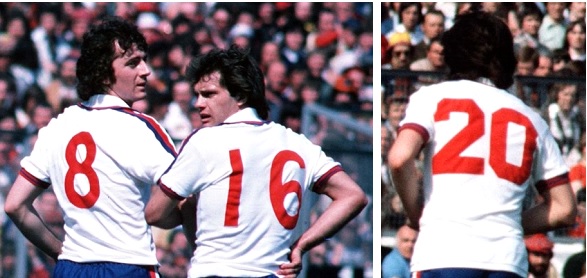
England
introduced a new number font to the red away shirt in April 1978, but it was only worn in the
following month's British
Championship on the home shirt for squad numbers 18 (Tony Woodcock), 19 (Stuart Pearson) and
20 (Paul Mariner):
-
From the
beginning of the 1978-79 season, the new font was worn by every
player.
|
|
Most Appearances |
35 - Dave Watson (1 sub)
33 -
Kevin Keegan
23 - Sir Trevor Brooking (3 sub), Mick Channon (1 sub),
Mick Mills (2 sub)
-
39 players won their first cap in the shirt, including Bryan Robson,
who went on to make ninety appearances, whilst Kenny Sansom made 86
and Ray Wilkins 84.
- 33 players won their last cap in the
shirt, including Alan Ball (his 72nd appearance), Colin Bell (his 48th) and Channon (his 46th).
- 17
players won all of their caps in this shirt, including Kevin Beattie,
with nine appearances.
|
|
Top Scorers |
13 - Mick Channon (3
pens.)
11 -
Kevin Keegan
6 - Malcolm Macdonald
- 19 players scored their first
international goal in this shirt, including Tony Woodcock, who went on to
score 16, Paul Mariner (13) and Trevor Francis (12).
- 13 players scored their last
international goal in this shirt, including Channon's 21st.
- Eight players scored all
of their
international goals in this shirt, including Malcolm Macdonald's six in two
successive games at Wembley in 1975 (five in one of them versus Cyprus).
|
|
Captains |
13 - Emlyn Hughes, Kevin
Keegan
7 -
Gerry Francis
6 - Alan Ball
2 - Mick Channon, Mick Mills
1 - Phil
Thompson
- Of the seven, only
Hughes had captained England before.
- All of Ball's appearances as captain
were in this shirt, as were both of Channon's. These were the only two players
to captain England for the last time, when wearing this shirt.
|
|
|
|
  Manager
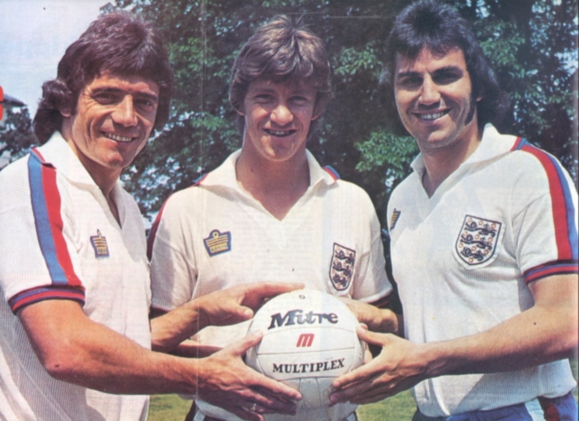
Don Revie's reign began with a startling new
strip from a new manufacturer, Admiral, and a resounding 3-0 victory over
Czechoslovakia at Wembley as England opened their European
Championship 1976 qualifying campaign. A collar returned to the England
shirt for the first time in two decades,
and, for the first time
ever, the England
shirt bore embellishments other than the three-lions emblem, red and blue striping on both collar and
sleeves. Former England forward Jimmy Greaves was perhaps a bit harsh
when he said that the striping made the new strip look like pyjamas, although that
description did fit the rather garish Admiral warm-up jackets that accompanied
the new uniform. The new shirt was worn with blue shorts, in a
lighter shade than the traditional navy blue, and bearing white and red striping down the sides, and white socks with red
and blue stripes at their top. Manager
Don Revie's reign began with a startling new
strip from a new manufacturer, Admiral, and a resounding 3-0 victory over
Czechoslovakia at Wembley as England opened their European
Championship 1976 qualifying campaign. A collar returned to the England
shirt for the first time in two decades,
and, for the first time
ever, the England
shirt bore embellishments other than the three-lions emblem, red and blue striping on both collar and
sleeves. Former England forward Jimmy Greaves was perhaps a bit harsh
when he said that the striping made the new strip look like pyjamas, although that
description did fit the rather garish Admiral warm-up jackets that accompanied
the new uniform. The new shirt was worn with blue shorts, in a
lighter shade than the traditional navy blue, and bearing white and red striping down the sides, and white socks with red
and blue stripes at their top.
Regrettably, the shirt manufacturer's insignia also appeared in
a prominent place on the England shirt for the first time (although the Umbro
insignia had been visible on the goalkeeper's jersey earlier in the 1970s). As Ted Croker, the FA executive secretary at the time, later explained in
his autobiography, the colourful shirt design and the presence of the
manufacturer's logo were the result of a new commercial arrangement under which
the shirt manufacturers paid royalties to the FA for the first time for the
right to promote and sell replica England kits. Croker, who became
an entrepreneur after his playing career ended and brought a strong business
background to the FA post, wrote:
The FA were criticised in the years following my
appointment for allowing a company, Admiral of Leicester, to market and
sell the England kit in return for royalty payments. It was said
that we were exploiting youngsters and allowing them to be ripped
off. I felt the criticisms were unjust at the time and still
do. The FA were about to move into commercial areas before I arrived
as secretary, but after my appointment a number of companies, believing
that I would be more receptive to their proposals than my predecessors,
wrote asking if they could bid for the exclusive contract for supplying
the England kit. At the time the England team wore a plain white
shirt and navy blue shorts which were supplied at normal rates by Umbro,
the Cheshire firm. Umbro never advertised the fact that they were
official suppliers to the FA so there was no need for them to pay us a
royalty. I
advised the international committee that we should accept the most
advantageous offer but it would mean redesigning the England strip. They
agreed and a five-year contract was signed with Admiral for a starting
payment of £15,000 a year or a ten-per-cent
royalty, whichever was the greater. I was enthusiastic about the
idea because it would give boys the chance to identify with the national
side, a chance that had been denied them when the England shirt was no
different from an ordinary t-shirt. It also meant that
parents could buy their sons a present which would be used often and not
be discarded when the novelty wore off, as happens with so many presents
given to children. And, of course, there was the money which in the
first year was insignificant, but by 1986 had risen to £120,000 a year,
nearly all of which is ploughed back into the game at lower levels.
It
was claimed that the Admiral strip was more expensive than comparable
strips sold by other manufacturers on behalf of club sides. We
conducted a survey into this and found there was no basis for these
allegations. If Admiral had been making such vast profits, it was
unlikely that the company would be forced into receivership, which
eventually happened. A new company took over after we had signed
another five-year contract.
There was a further
reason why we were happy to work with Admiral; they were an English
company and we wanted to ensure that the national team was supplied by a
domestic supplier, not by a foreign-based company. The principle
objective of the FA, as is stated in the annual accounts every year, is to
promote the game of association football and to do that satisfactorily
requires a lot of money. - Ted Croker, The First Voice You Will Hear Is ..., pp.
78-79 (1987).
Sadly, this shirt became associated with
failure. It was never worn in a major final tournament because England
did not qualify for either the European Championship of 1976 or the World Cup
of 1978, the two big competitions held during its tenure of almost six years. The only
tournaments at which it appeared were the annual
British Championship and the
American
Bicentennial Cup Tournament of 1976, but its end was marked by a measure of success. It was
worn during England's successful
European Championship 1980 qualifying campaign.
As outlined in the Variations above, Admiral appear to have had
considerable difficulty in attaching both their logo and the three-lions
emblem to the lightweight shirts introduced in 1975, with each being
excluded from the match kit on occasion. When comparing photos
of players in their kit, sometimes even in the same game, the emblem
appears in different places on different shirts, sometimes level with the
Admiral logo, sometimes higher and sometimes lower!
The kit made its last appearance in the victory against Spain, as England prepared for the
European Championship final tournament of 1980 in Italy, where they wore
the
second Admiral home strip.
The shirts pictured at the top of the page were worn by
(left to right); Kevin Keegan (regular number-seven shirt - front and back)
and Dave Watson (first lightweight shirt v. Cyprus), displayed here with permission from Simon Shakeshaft, curator of
the
Neville Evans National Football Shirt Collection. |
Matches in which England wore the
1974 Home White Uniform
(with predominant sleeve lengths) |
|
Season 1974-75 |
|
|
|
486 |
30 October 1974 -
England 3
Czechoslovakia 0 [0-0]
Wembley Stadium, Wembley, London (83,858) |
Channon, Bell (2) |
 exc.2 exc.2 |
HW |
|
487 |
20 November 1974 -
England 0
Portugal 0 [0-0]
Wembley Stadium, Wembley, London (84,461) |
|
exc.1 |
HD |
|
Friendly match |
|
488 |
12 March 1975 -
England 2
West Germany 0 [1-0]
Wembley Stadium, Wembley, London (98,000) |
Bell, Macdonald |
exc.1 |
HW |
|
European Championship Preliminaries |
|
489 |
16 April 1975 -
England 5
Cyprus 0 [2-0]
Wembley Stadium, Wembley, London (68,245) |
Macdonald
(5) |
exc.1 |
HW |
|
490 |
11 May 1975 -
Cyprus 0 England
1 [0-1]
Tsirion Athletic Centre, Ayia Phyla, Lemesos (15,708) |
Keegan |
 |
AW |
|
British Championship |
|
491 |
17 May 1975 -
Northern Ireland 0 England
0 [0-0]
Windsor Park, Donegall Avenue, Belfast (36,000) |
|
|
AD |
|
492 |
21 May 1975 -
England 2
Wales 2 [1-0]
Wembley Stadium, Wembley, London (53,000) |
Johnson (2)
Toshack, Griffiths |
|
HD |
|
493 |
24 May 1975 -
England
5
Scotland 1 [3-1]
Wembley Stadium, Wembley, London (98,241) |
Francis (2), Beattie,
Bell, Johnson
Rioch (pen) |
|
HW |
|
Friendly match |
|
494 |
3 September 1975 -
Switzerland 1 England 2 [1-2]
Sankt Jakob Stadium, Sankt Jakob, Basel (25,000) |
Müller
Keegan, Channon |
|
AW |
|
European Championship Preliminaries |
|
495 |
30 October 1975 -
Czechoslovakia 2 England 1 [1-1]
Tehelné pole, Nové
Mesto, Bratislava (50,651) |
Nehoda, Galis
Channon |
|
AL |
|
496 |
19 November 1975 -
Portugal 1 England 1 [1-1]
Estádio José Alvalade, Quinta do Lambert, Lisboa (13,912) |
Rodrigues
Channon |
exc.3 |
AD |
|
Football Association of Wales Centenary match |
|
497 |
24 March 1976 -
Wales 1
England
2 [0-0]
Racecourse Ground, Mold Road, Wrexham (20,927) |
Curtis
Kennedy, Taylor |
exc.2* |
AW |
|
British Championship |
|
498 |
8 May 1976 -
Wales 0 England
1 [0-0]
Ninian Park, Sloper Road, Cardiff (24,592) |
Taylor |
|
AW |
|
499 |
11 May 1976 -
England
4
Northern Ireland 0 [2-0]
Wembley Stadium, Wembley, London (48,000) |
Francis, Channon (2
(1 pen)),
Pearson |
|
HW |
|
500 |
15 May 1976 -
Scotland 2
England 1 [1-1]
Hampden Park, Mount Florida, Glasgow (85,165) |
Masson, Dalglish
Channon |
exc.1 |
AL |
|
American Bicentennial Cup |
|
501 |
23 May 1976 -
Brazil 1 England
0 [0-0]
LA Memorial Coliseum, Exposition Park, Los
Angeles (32,495) |
Roberto |
|
NL |
|
England
wore the white home shirt with the 1976 white away shorts and 1976
alternative yellow
socks, against Brazil. |
|
502 |
28 May 1976 -
England 3
Italy 2 [0-2]
Yankee Stadium, Bronx, New York City (40,650) |
Channon (2), Thompson
Graziani (2) |
|
NW |
|
Friendly match |
|
504 |
8 September 1976 -
England 1
Republic of Ireland 1 [1-0]
Wembley Stadium, Wembley, London (51,000) |
Pearson
Daly (pen) |
|
HD |
|
World Cup Preliminary matches |
|
505 |
13 October 1976 -
England 2
Finland 1 [1-0]
Wembley Stadium, Wembley, London (87,000) |
Tueart, Royle
Nieminen |
|
HW |
|
506 |
17 November 1976 -
Italy 2 England
0 [1-0]
Stadio Olimpico, Municipio
XV, Roma (70,718) |
Antognoni, Bettega |
|
AL |
|
Friendly match |
|
507 |
9 February 1977 -
England 0
Netherlands
2 [0-2]
Wembley Stadium, Wembley, London (90,260) |
Peters (2) |
exc.5 |
HL |
|
World Cup Preliminary match |
|
508 |
30 March 1977 -
England 5
Luxembourg 0 [1-0]
Wembley Stadium, Wembley, London (81,718) |
Keegan, Francis, Kennedy,
Channon (2
(1 pen)) |
|
HW |
|
British Championship |
|
509 |
28 May 1977 -
Northern Ireland 1 England
2 [1-1]
Windsor Park, Donegall Avenue, Belfast (35,000) |
McGrath
Channon, Tueart |
|
AW |
|
510 |
31 May 1977 -
England 0
Wales 1 [0-1]
Wembley Stadium, Wembley, London (48,000) |
James (pen) |
|
HL |
|
511 |
4 June 1977 -
England 1
Scotland 2 [0-1]
Wembley Stadium, Wembley, London (98,103) |
Channon (pen)
McQueen, Dalglish |
|
HL |
|
515 |
7 September 1977 -
England 0
Switzerland 0 [0-0]
Wembley Stadium, Wembley, London (42,000) |
|
|
HD |
|
World Cup Preliminary matches |
|
516 |
12 October 1977 -
Luxembourg 0 England
2 [0-1]
Stade Municipal, Rollengergronn-Belair-Nord, Stad
Lëtzebuerg (10,621) |
Mariner, Kennedy |
|
AW |
|
517 |
16 November 1977 -
England 2 Italy
0 [1-0]
Wembley Stadium, Wembley, London (92,000) |
Keegan,
Brooking |
|
HW |
|
British Championship |
|
520 |
13 May 1978 -
Wales 1 England
3 [0-1]
Ninian Park, Sloper Road, Cardiff (17,698) |
Dwyer
Latchford, Currie, Barnes |
|
AW |
|
521 |
16 May 1978 -
England
1
Northern Ireland 0 [1-0]
Wembley Stadium, Wembley, London (55,000) |
Neal |
|
HW |
|
522 |
20 May 1978 -
Scotland 0
England 1 [0-0]
Hampden Park, Mount Florida, Glasgow (88,319) |
Coppell |
|
AW |
|
European Championship Preliminaries |
|
524 |
20 September 1978 -
Denmark
3 England 4
[2-2]
Idrætsparken, Indre
Østerbro, København
(47,600) |
Simonsen (pen), Arnesen, Røntved
Keegan (2),
Latchford, Neal |
|
AW |
|
525 |
25 October 1978 -
Republic of Ireland 1 England
1 [1-1]
Lansdowne Road, Ballsbridge, Dublin (48,613) |
Daly
Latchford |
|
AD |
|
British Championship |
|
528 |
19 May 1979 -
Northern Ireland 0 England
2 [0-2]
Windsor Park, Donegall Avenue, Belfast (35,000) |
Watson, Coppell |
|
AW |
|
529 |
23 May 1979 -
England 0
Wales 0 [0-0]
Wembley Stadium, Wembley, London (70,220) |
|
|
HD |
|
530 |
26 May 1979 -
England 3
Scotland 1 [1-1]
Wembley Stadium, Wembley, London (100,000) |
Barnes, Coppell, Keegan
Wark |
|
HW |
|
European Championship Preliminaries |
|
534 |
12 September 1979 -
England 1 Denmark
0 [1-0]
Wembley Stadium, Wembley, London (82,000) |
Keegan |
|
HW |
|
535 |
17 October 1979 -
Northern Ireland 1 England
5 [0-2]
Windsor Park, Donegall Avenue, Belfast (17,755) |
Moreland (pen)
Francis (2),
Woodcock (2), Nicholl OG |
|
AW |
|
536 |
22 November 1979 - England 2
Bulgaria 0 [1-0]
Wembley Stadium, Wembley, London (71,491) |
Watson, Hoddle |
|
HW |
|
England
wore the white home shirt with the blue home shorts and 1976 red away socks, against
Bulgaria. |
|
537 |
6 February 1980 -
England 2
Republic of Ireland 0 [1-0]
Wembley Stadium, Wembley, London (90,299) |
Keegan (2) |
|
HW |
* at least.
|
Other match in which England wore
the 1974 Home White Socks |
|
Season 1978-79 |
|
|
|
531 |
6 June 1979 -
Bulgaria
0 England 3 [0-1]
Stadion Vasil Levski, Sredets, Sofija (31,322) |
Keegan, Watson, Barnes |
AW |
|
England
wore the 1976 red away shirts with the white away shorts, but wore the
white home socks, against
Bulgaria. |
The Under-23, Under-21 and Youth
(Under-18) teams wore the same design, except that each wore an embroidered
scroll below the emblem on a rectangular patch, within which was displayed, in navy blue, either INTERMEDIATE (for the Under-23s
and Under-21s) or YOUTH (for the Under-18s). The Youth team wore a UEFA
logo, instead of the Three Lions emblem in the 1979 UEFA Youth Tournament in
Austria and possibly in other years, as well. Both England's B team and the
Semi-Professional team wore an
identical kit to the full international team, without the scrolls.
Players wearing both sleeve lengths in
the same match are counted once in each column. Playing substitutes and
those substituted each count as one. Players wearing different shirts
with the same sleeve length in the same match only count as one.
|
England's Record wearing the 1974 Home
Shirt |
|
Type |
P |
W |
D |
L |
F |
A |
GD |
FTS
|
CS |
FAv |
AAv |
Pts % |
W/L |
|
Home |
24 |
16 |
5 |
3 |
50 |
12 |
+38 |
5 |
15 |
2.083 |
0.50 |
77.1 |
+13 |
|
Away |
18 |
12 |
3 |
3 |
31 |
16 |
+15 |
2 |
7 |
1.722 |
0.889 |
75.0 |
+9 |
|
Neutral |
2 |
1 |
0 |
1 |
3 |
3 |
=0 |
1 |
0 |
1.50 |
1.50 |
50.0 |
=0 |
|
Total |
44 |
29 |
8 |
7 |
84 |
31 |
+53 |
8 |
22 |
1.909 |
0.705 |
75.0 |
+22 |
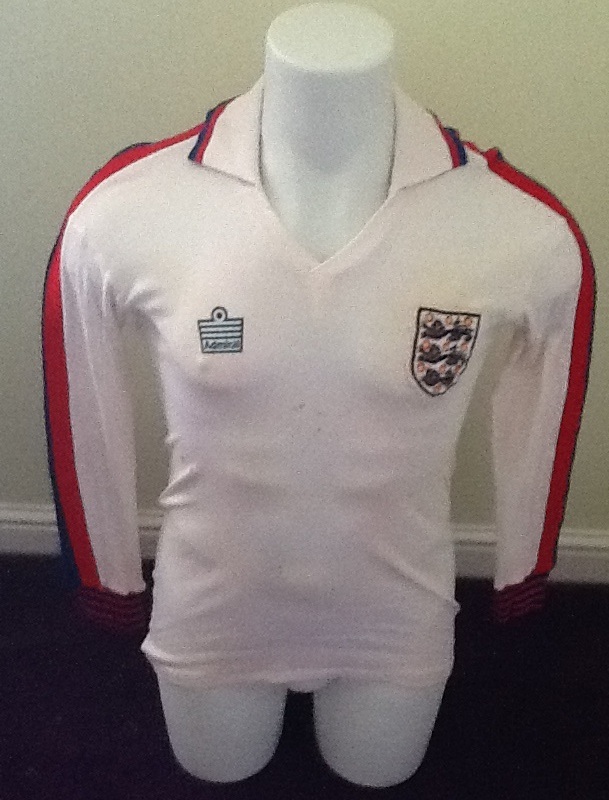 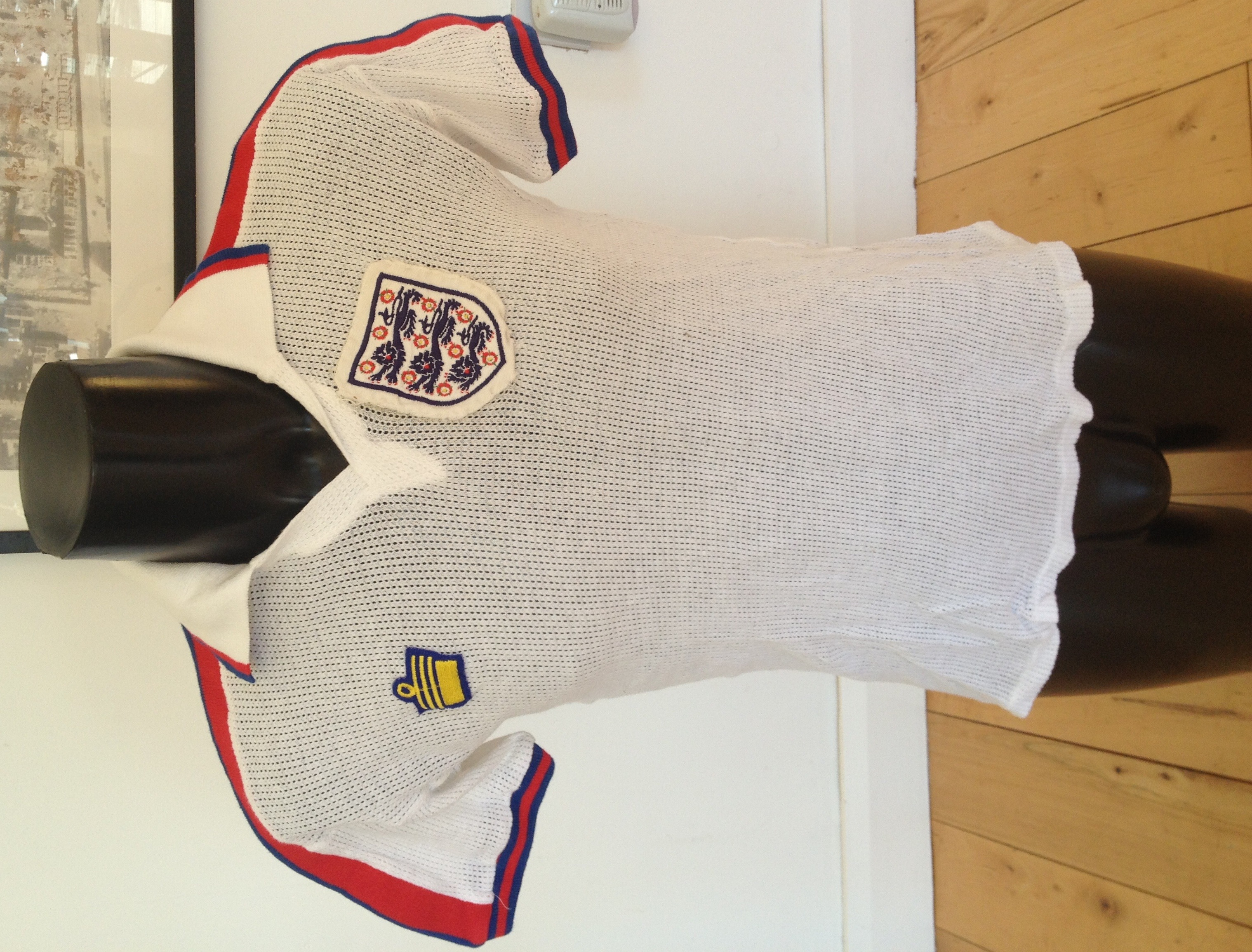
Two great
examples of variations in the Admiral logo. On the left is the polyester and
cotton shirt worn by Paul Madeley against Portugal in 1975. The logo is a shiny
plastic white one, as opposed to the usual yellow, but the white one was worn
in, at least, two other internationals (West Germany and Cyprus at Wembley in
1975). This shirt is part of
Richard Clarke's 'Three Lions
- England Match Worn Shirts' Facebook Collection.
The shirt on the right is
extremely rare. It's the lightweight shirt worn by David Johnson against Wales
in 1975, when scoring twice on his international debut. For some reason, his
logo does not include the Admiral lettering. This is the only example of this
variation that we've seen and we are grateful to Michael Hughes for sharing this
image with us.
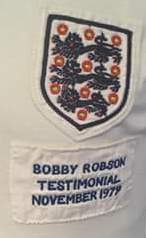
Below is the emblem. plus a
commemorative patch on another shirt from Richard's collection, worn in Sir
Bobby Robson's testimonial, when his Ipswich Town team took on an England team,
then managed by Ron Greenwood.
____________________
CG/GI/PY
|
|
 England
Football Online
England
Football Online

 to March
.jpg)
.jpg)
.jpg)
.jpg)